
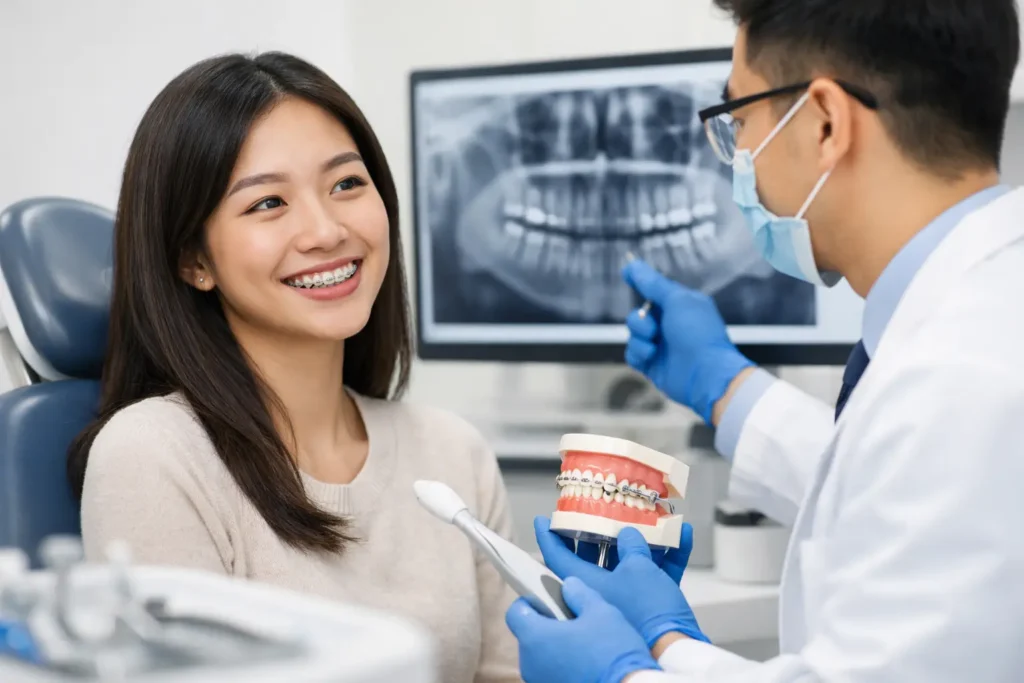
If you have been putting off a Kulim braces consultation because you are unsure what the first visit involves, you are not alone. Many patients want straighter teeth, but hesitate because they expect pressure, complicated terms, or a treatment plan they do not fully understand. A good consultation should feel clear, respectful, and practical from the start.
Braces are not just about appearance. In many cases, they also help correct bite problems, reduce uneven tooth wear, make cleaning easier, and support long-term oral health. For teenagers, adults, and even parents exploring options for a child, the first consultation is where those questions become real and manageable.
Why a braces consultation matters
A braces consultation is not simply a quick look at your teeth. It is the stage where the dentist or orthodontic provider evaluates how your teeth, jaws, and bite work together. Two people may both say, “I have crooked teeth,” but the treatment approach can be very different depending on spacing, crowding, overbite, underbite, missing teeth, or gum condition.
This is also the right time to talk about your goals. Some patients want major bite correction. Others mainly want to improve smile alignment before a wedding, graduation, or career milestone. Neither reason is trivial. What matters is choosing a treatment plan that is safe, realistic, and matched to your needs.
What happens during a Kulim braces consultation
Most first visits follow a straightforward process. The dentist begins by asking about your concerns, dental history, and any symptoms such as jaw discomfort, difficulty chewing, or trouble cleaning between crowded teeth. If you have had previous orthodontic treatment, retainers, or extractions, that history can affect planning.
Next comes the clinical examination. This usually includes checking tooth position, bite alignment, gum health, and how your upper and lower teeth meet. If your gums are inflamed or there is untreated decay, those issues may need attention before braces begin. That is not a setback. It is part of responsible treatment planning.
Digital X-rays or imaging may also be recommended. These help the dentist see tooth roots, jaw structure, impacted teeth, and other details that are not visible in a standard exam. In some cases, photographs or scans are taken to document your starting point and support a more precise plan.
Once the records are reviewed, the dentist explains whether braces are suitable, what kind of correction is possible, and how long treatment may take. This part should be easy to follow. You should leave with a clearer sense of your condition, not more confusion.
Questions patients usually ask
Most people want to know the same things during a braces consultation, and for good reason. Cost matters. Treatment length matters. Comfort matters. So does appearance, especially for working adults and older teens.
A common question is whether braces are the only option. Sometimes traditional braces are the best choice, especially for more complex alignment or bite issues. In other situations, different orthodontic approaches may be discussed depending on the case. The right answer depends on how much movement is needed and how predictable the result needs to be.
Another frequent question is whether teeth need to be removed. Some patients hear the word extraction and become anxious immediately. The truth is that extractions are case-dependent. Severe crowding may sometimes require it, but not every orthodontic case does. A careful consultation helps avoid assumptions.
Patients also ask whether braces hurt. There can be soreness, especially after adjustments or when braces are first placed, but this is usually manageable and temporary. The better question is not whether you will feel anything, but whether the treatment is being planned carefully enough to move teeth safely and steadily.
Braces options and why the right choice is not always the cheapest
There is a natural temptation to compare braces mainly by price. That is understandable, but braces are a long-term treatment, not a one-time purchase. The quality of diagnosis, follow-up, and treatment planning matters just as much as the appliance itself.
Traditional metal braces remain a reliable choice because they are effective, durable, and well-suited for a wide range of cases. For many patients, they offer strong control and predictable tooth movement. Ceramic braces may appeal to patients who want a less noticeable look, though they may not be ideal for every lifestyle or case complexity.
The consultation is where these trade-offs should be explained honestly. A lower fee may not reflect the same level of monitoring, imaging, or case planning. On the other hand, a higher-cost option is not automatically better if it does not suit your clinical needs. What you want is value, not just a number.
What affects the cost of braces
There is no single standard cost because orthodontic treatment varies widely. Mild spacing issues are not the same as severe crowding with bite correction. The total fee may depend on the type of braces, treatment duration, complexity, required diagnostics, and how often adjustments are needed.
It is also worth asking what is included in the quoted fee. Some clinics bundle consultations, records, appliance placement, and review visits together, while others separate them. Retainers after treatment may or may not be included. That difference matters when you are comparing options.
A trustworthy consultation should give you transparent information. You do not need every detail memorized on the spot, but you should understand what you are paying for and what the treatment journey is likely to involve.
When children, teens, and adults should come in
Parents often wonder if a child is too young for an orthodontic evaluation. Adults often wonder if they are too old. In reality, both concerns are common and neither should stop you from asking.
Children may benefit from an early assessment if there are signs of crowding, crossbite, protruding teeth, mouth breathing, or jaw development concerns. That does not always mean braces start immediately. Sometimes the best plan is simply to monitor growth and timing.
Teenagers are often good candidates because many alignment issues can be addressed while growth is still active. Adults can also achieve excellent results. The main difference is that adult cases may involve restorations, gum concerns, or missing teeth that require more coordinated planning.
That is one reason a family-focused dental clinic can be especially helpful. When the provider understands both general oral health and orthodontic needs, treatment decisions tend to be more balanced and practical.
How to prepare for your consultation
You do not need to do much before the visit, but a little preparation helps. Think about what bothers you most. Is it crowding in the front teeth, a bite that feels off, gaps, or a smile you avoid showing in photos? Knowing your priorities helps guide the discussion.
If you have dental records, past X-rays, or a history of previous braces, bring that information if available. It is also helpful to write down questions in advance. Patients often forget what they wanted to ask once they are in the chair.
Try to be honest about your routine and expectations too. If you are worried about keeping braces clean, attending regular visits, or choosing a less visible option for work, say so. These are not minor details. They affect what treatment will work best for you.
Choosing the right clinic for a Kulim braces consultation
Not every braces consultation feels the same, and that matters. You want a clinic that listens carefully, explains clearly, and looks at your oral health as a whole, not just your front teeth. Orthodontic treatment is a relationship over time, so trust should be present from the first visit.
Look for a setting where patient comfort is taken seriously and modern diagnostics are part of the process. Clear communication, careful examination, and realistic treatment planning usually tell you more than sales language ever will. If a recommendation is made too quickly without enough evaluation, it is reasonable to ask more questions.
For local families and adults in Kulim, a dependable clinic should make the process feel less intimidating and more structured. That means professional guidance, transparent answers, and a treatment plan built around long-term results rather than quick promises. At Ideal Smile, that patient-centered approach is part of what helps people move forward with confidence.
A braces consultation should leave you feeling informed, not pressured. If straightening your teeth has been on your mind for a while, the first step does not need to be a big leap. It can simply be a conversation that gives you a clearer path toward a healthier, more confident smile.
