
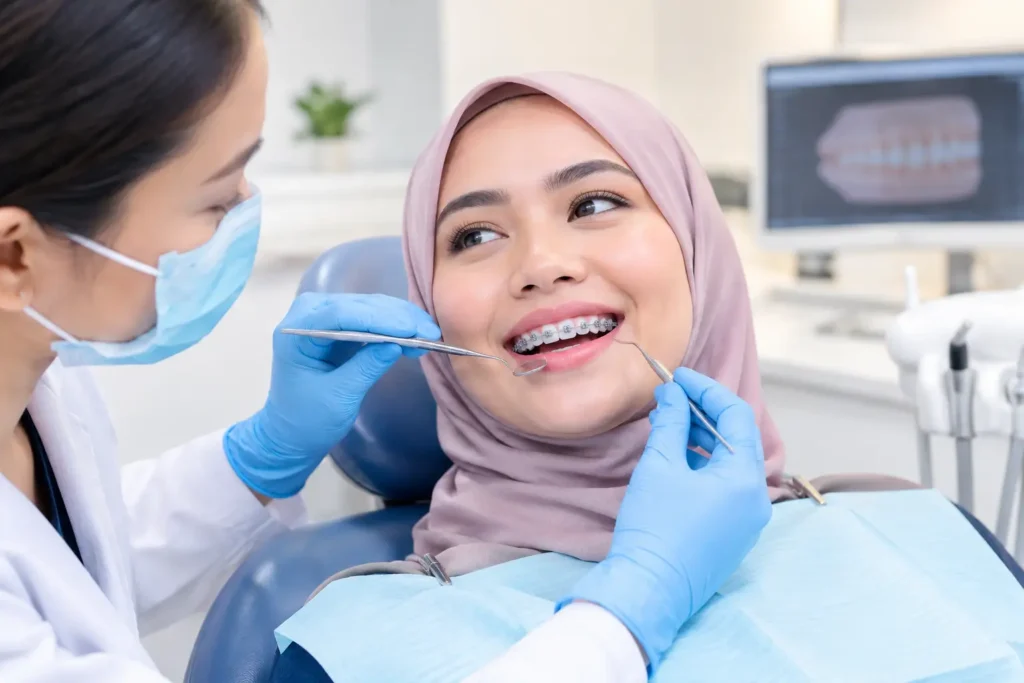
The first evening with new braces can feel unfamiliar: your teeth may feel tender when you bite into dinner, and your cheeks may notice every bracket. So, do braces hurt? Most patients feel pressure and soreness rather than sharp pain. The feeling is temporary, manageable, and usually a sign that the braces are beginning to move teeth gradually into healthier positions.
For children, teens, and adults, knowing what is normal can make orthodontic treatment feel much less worrying. Every smile and treatment plan is different, but there is a predictable pattern to the adjustment period.
Do braces hurt when they are first put on?
Having braces fitted is usually not painful. The dentist or orthodontic provider cleans and prepares the teeth, bonds the brackets in place, and places the wire. You may need to keep your mouth open for a while, which can be tiring, but the appointment itself should not hurt.
The soreness often starts a few hours later, once the wire begins applying gentle, steady force to the teeth. Teeth can feel sensitive when chewing, especially during the first two to four days. Some people describe it as pressure or a bruised feeling around several teeth. Others notice only mild tenderness.
This pressure is part of how braces work. Bone and supporting tissues around the roots gradually remodel as teeth move. Orthodontic movement is carefully controlled, so it should not feel like severe or constant pain.
What braces feel like at each stage
The first week
The first week is often the biggest adjustment. Along with tender teeth, brackets can rub against the inside of your lips and cheeks until the skin becomes accustomed to them. This rubbing may create small sore spots, especially if a bracket sits close to a sensitive area.
Orthodontic wax can help create a smooth barrier over an irritating bracket. Dry the bracket as well as possible first, then press a small piece of wax over it. It is also helpful to carry wax to school or work during the first few weeks.
Choose softer foods while chewing feels uncomfortable. Yogurt, eggs, soup, noodles, rice, mashed vegetables, soft fish, and smoothies are easier on sore teeth than crunchy snacks or tough meat. This is not forever. Most patients return to more normal meals once the initial tenderness settles.
After tightening or adjustment visits
Braces are adjusted periodically so treatment can continue moving forward. After an adjustment, you may again feel pressure for one to three days. It is commonly milder and shorter than the discomfort after the first fitting, although this depends on the type of adjustment and how much movement is needed.
Try to schedule ahead when possible. If you have an important presentation, family event, or sports activity, allow yourself a day or two to adapt after an adjustment. That does not mean you need to put life on hold. It simply helps you plan softer meals and avoid surprises.
When a wire or bracket irritates your mouth
A poking wire is different from normal tooth soreness. It can feel sharp, particularly at the back of the mouth, and it may irritate the cheek or gum. Wax may offer temporary relief, but contact your dental clinic so the wire can be checked and safely adjusted.
Do not try to cut a wire at home with household tools. You could injure your mouth, damage the appliance, or leave a sharp edge behind. A loose bracket should also be assessed, even if it is not painful.
How long does braces soreness last?
Most soreness improves noticeably within three to five days after braces are fitted or adjusted. For some patients, it can take up to a week to feel fully comfortable. If discomfort is getting worse rather than better, lasts longer than a week, or prevents you from eating and sleeping normally, it is sensible to call your dentist.
Pain tolerance varies. Adults may be more aware of the pressure because they have not had orthodontic treatment before, while younger patients may need reassurance and practical help with food choices and wax. The type of braces, the position of crowded teeth, and the treatment stage can also affect how it feels.
It is worth remembering that strong pain is not required for braces to be effective. More discomfort does not mean treatment is working better. Your provider should use an approach that supports safe, steady tooth movement and checks that you are coping well at each visit.
Simple ways to stay comfortable with braces
Small habits make the first few days easier. Stick with soft foods when teeth are tender, then gradually return to your usual meals as comfort improves. Cold water or a chilled smoothie may feel soothing, though avoid chewing ice because it can damage brackets.
Good brushing matters even more when your mouth is sore. Food can collect around brackets and wires, increasing the risk of plaque buildup, swollen gums, and cavities. Use a soft toothbrush, take your time around each bracket, and clean between teeth as instructed by your dental team. Clean braces are less likely to cause gum irritation that can be mistaken for orthodontic pain.
If you need pain relief, use only medicine that is appropriate for you and follow the package directions or your dentist’s advice. Parents should check the correct option and dose for a child. Do not place aspirin or other medication directly on the gums or teeth. It can burn soft tissue and will not solve the cause of the discomfort.
Avoid foods that can break or bend orthodontic appliances. Hard candy, popcorn kernels, ice, sticky caramel, and chewing gum can create an unexpected problem that is far more uncomfortable than routine adjustment soreness. Cut firm foods such as apples into small pieces instead of biting directly into them.
When braces discomfort needs professional attention
Some discomfort is expected, but you should not feel that you have to endure anything severe. Contact your dental provider if you have intense throbbing pain, facial swelling, fever, a painful gum swelling, trouble swallowing, or a suspected infection. These symptoms may be unrelated to braces and need timely assessment.
You should also call if a bracket is loose, a wire is poking, a retainer or aligner no longer fits, or a mouth sore is not improving. A quick adjustment can prevent a small issue from becoming more painful or delaying treatment.
For patients who grind their teeth, have sensitive gums, or already have untreated cavities, an examination before orthodontic treatment is especially valuable. Braces move teeth, but they do not replace routine preventive care. Healthy gums and teeth give orthodontic treatment the best foundation.
Do braces hurt less with time?
Yes, for most patients. Your cheeks become used to the brackets, you learn which foods are easiest after adjustments, and brushing around the appliances becomes part of your routine. The first few days are usually the most noticeable because everything is new.
Braces are a commitment, and there can be moments of inconvenience. Still, temporary tenderness is usually a small part of a treatment process designed to improve bite function, make teeth easier to clean, and build confidence in your smile. A caring dental team should explain what is happening, listen if something feels wrong, and help you stay comfortable throughout treatment.
If you or your child are considering braces, ask questions before treatment begins and speak up at every appointment. Feeling informed and supported can make the path to a healthier smile feel much easier.
