
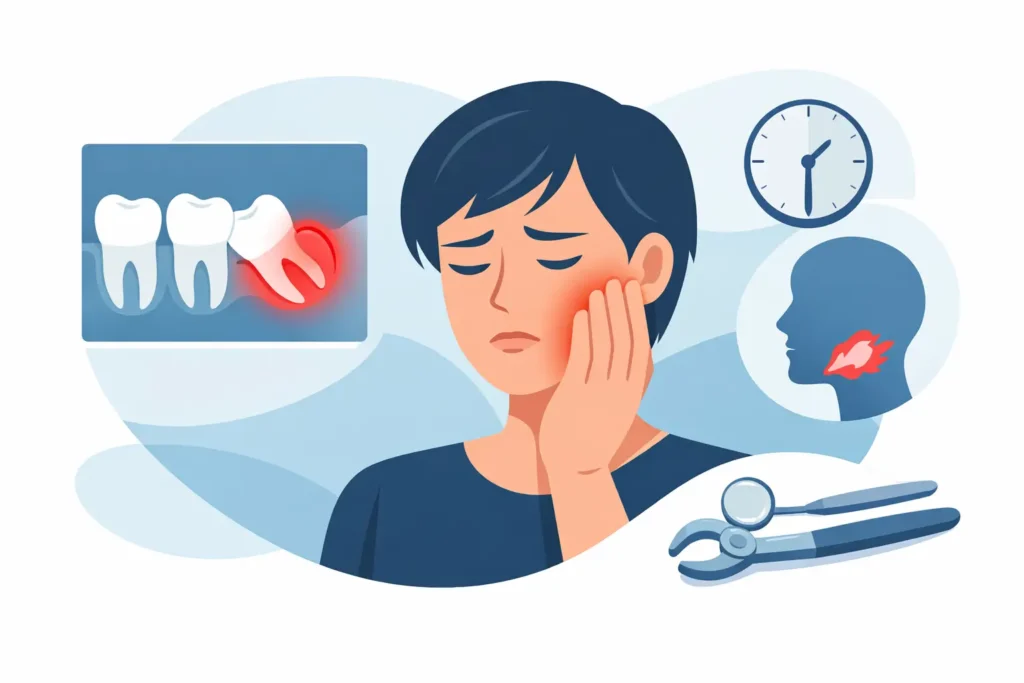
If you are a day or two past surgery and still sore, that does not usually mean anything is wrong. One of the most common questions patients ask is how long does it take for wisdom teeth extraction to stop hurting, and the honest answer is that pain improves in stages rather than disappearing all at once.
For most people, the worst discomfort happens in the first 24 to 72 hours. After that, pain usually starts to ease day by day. Many patients feel noticeably better by day 3 or 4, and most of the soreness settles within about 1 to 2 weeks. That said, the exact timing depends on how the tooth was removed, whether the tooth was impacted, and how well the area heals afterward.
A simple extraction usually feels different from a surgical wisdom tooth removal. If the tooth had already come through the gum and was easy to remove, recovery is often faster. If the tooth was trapped under the gum or bone, the tissue needs more time to calm down. In those cases, tenderness, jaw stiffness, and swelling can linger a little longer, even when healing is going normally.
How long does it take for wisdom teeth extraction to stop hurting normally?
A normal recovery usually follows a predictable pattern. On the day of the extraction, numbness wears off and discomfort begins to build. The first night can feel achy or throbbing, especially once you are home and the anesthesia is gone.
Days 1 to 3 are typically the toughest. This is when swelling often peaks, and the jaw may feel tight when opening your mouth. If multiple wisdom teeth were removed, especially all four at once, the soreness can feel more intense simply because more tissue is healing.
By days 4 to 7, many patients notice a clear improvement. The pain often changes from sharp or throbbing to mild soreness, especially when chewing or talking a lot. You may still need soft foods and some rest, but the trend should be getting better, not worse.
Around 1 to 2 weeks, most people are no longer dealing with significant pain. The gum tissue is still healing, and the socket is not fully closed yet, but everyday discomfort should be minimal. Mild sensitivity or occasional tenderness can last longer, especially if the extraction was difficult, but it should not interfere much with daily life.
Full healing of the socket takes longer than the pain does. Even after the soreness is gone, the bone and gum continue repairing for several weeks or even months. That is normal and usually not something you feel.
What affects how long wisdom teeth extraction hurts?
Not every recovery is the same. Two people can have wisdom teeth removed on the same day and feel very different by the end of the week.
One major factor is whether the tooth was impacted. Impacted wisdom teeth often require a small surgical procedure, sometimes including lifting the gum and removing a bit of bone. Because the treatment is more involved, the body needs more time to recover.
Another factor is how many teeth were removed. A single upper wisdom tooth that came in normally may heal fairly quickly. Four extractions, particularly if they were lower impacted teeth, usually bring more swelling, more jaw stiffness, and a longer recovery window.
Your own healing response matters too. Some people naturally bruise and swell more than others. Age can play a role as well. Younger patients often recover a little faster, while older adults may notice more lingering soreness.
Aftercare also makes a real difference. Resting, taking medications as directed, keeping the area clean, and avoiding habits that disturb the blood clot can all help pain settle sooner. On the other hand, smoking, vigorous rinsing, using a straw too early, or chewing hard foods can irritate the area and prolong discomfort.
What kind of pain is normal after wisdom tooth removal?
Normal pain is usually sore, achy, tender, or mildly throbbing. It tends to improve with prescribed medication or over-the-counter pain relief recommended by your dentist. It may feel worse when the jaw moves, when swelling is at its peak, or when food brushes against the area.
It is also common to have swelling in the cheek, mild bruising, a bad taste in the mouth for a short time, and some difficulty opening wide. These symptoms can feel unpleasant, but they do not automatically point to a problem.
Pain should gradually ease. That steady improvement is one of the clearest signs that healing is on track.
When pain after wisdom teeth extraction is not normal
The main red flag is pain that gets worse instead of better after the first few days. If you felt like you were improving and then suddenly developed stronger pain around day 3 to 5, your dentist may want to check for a dry socket.
A dry socket happens when the protective blood clot in the extraction site dissolves too early or becomes dislodged. Without that clot, the underlying area becomes exposed, and the pain can be much stronger than expected. Patients often describe it as deep, throbbing, or radiating to the ear, jaw, or side of the face.
You should also contact your dentist if you have significant swelling that keeps increasing, fever, pus, trouble swallowing, or an unpleasant smell that does not improve. Those symptoms can suggest infection or another issue that needs professional care.
Mild soreness is expected. Severe or escalating pain is not something you should just push through.
How to help wisdom teeth extraction pain go away faster
The first priority is protecting the healing clot. For the first day, rest, avoid spitting forcefully, and skip straws and smoking. Those small habits matter more than many people realize.
Cold compresses can help during the first 24 to 48 hours by reducing swelling and numbing the area a bit. After that, some patients find warm compresses more helpful for jaw stiffness.
Stick with soft foods at first. Yogurt, mashed potatoes, soup that is not too hot, eggs, smoothies eaten with a spoon, and soft rice are usually easier on the area. Crunchy, spicy, or sharp-edged foods can irritate the socket and make healing feel slower.
Good oral hygiene still matters, but it needs to be gentle. Your dentist may advise rinsing with salt water after the first day to keep the area clean. You should brush the rest of your teeth normally while being careful around the extraction site.
Take medications exactly as directed. Some patients stop pain relief too early and then feel unnecessarily uncomfortable. Others wait until the pain is severe before taking anything, which makes it harder to catch up. Staying ahead of pain in the first couple of days often makes recovery smoother.
How long does it take for wisdom teeth extraction to stop hurting if all four are removed?
When all four wisdom teeth are removed at once, pain and swelling usually feel more intense in the first several days. That does not necessarily mean the healing is worse. It often just reflects that more than one area is recovering at the same time.
Most patients still notice the strongest discomfort in the first 3 days, followed by gradual improvement over the next week. You may need a little longer before eating normally or opening your mouth comfortably. A recovery of 10 to 14 days is common, and some tenderness can hang on beyond that if lower impacted teeth were involved.
The trade-off is convenience. Recovering once can be easier than planning separate procedures, but the first few days may be more demanding.
When can you eat, work, and get back to normal?
Many people can return to light daily activities within 1 to 3 days, depending on the type of work they do and how they feel. If your job is physically demanding, involves a lot of talking, or you had a more complex extraction, you may need a bit more time.
Eating usually progresses in phases. Soft foods come first, then more solid foods as chewing becomes comfortable. It is better to follow your comfort level than to rush it. If chewing causes sharp pain, your mouth is telling you it is not ready.
Exercise should usually wait a few days because increased blood pressure can trigger bleeding or throbbing. Your dentist can give the best timeline based on your procedure.
If you ever feel unsure about what is normal, asking early is better than worrying at home. A good dental team will want to know if pain is lasting longer than expected, especially if it is interfering with sleep, eating, or daily routine.
Most wisdom tooth pain improves much sooner than anxious patients fear. Healing takes patience, but the trend should be steady, manageable progress. If your recovery does not seem to be following that pattern, getting it checked can give you peace of mind and help you heal more comfortably.

Pingback: How Long Does Pain Last After Lower Wisdom Tooth Extraction? - Klinik Pergigian Kulim