
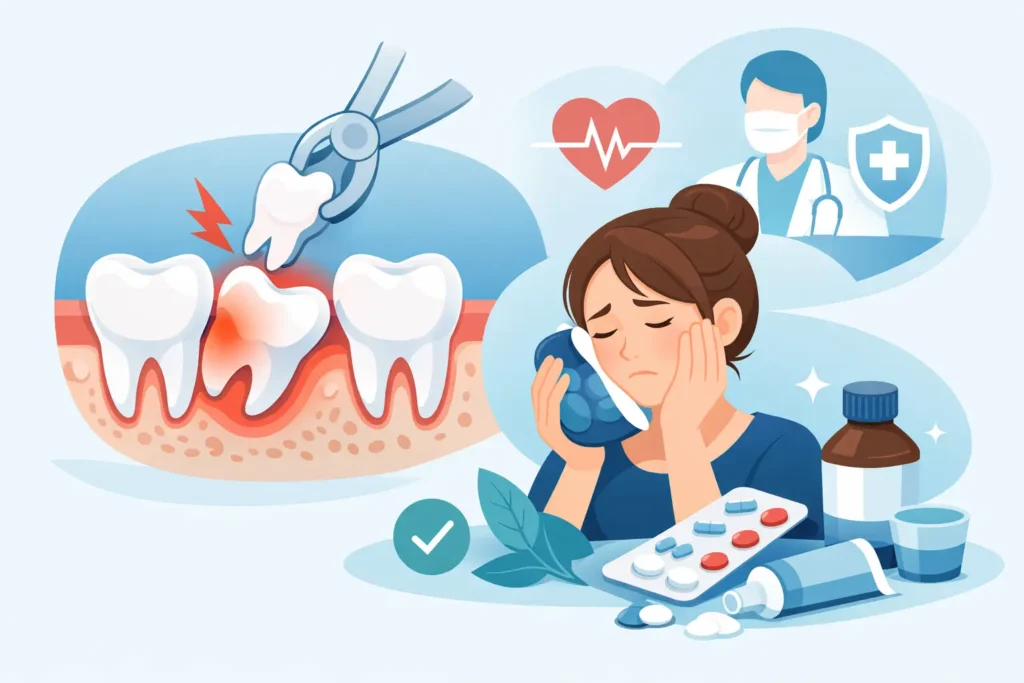
The numbness wears off, and that is usually when the real questions start. Is this amount of pain normal? Should you use ice or heat? Why does one side feel fine while the other throbs? If you are looking for wisdom tooth extraction pain relief, the good news is that most discomfort follows a fairly predictable pattern, and there are practical ways to make recovery easier.
Pain after wisdom tooth removal is common, but it should not feel mysterious. When you know what is expected, what helps, and what deserves a call to your dentist, recovery feels much less stressful. That matters for busy adults, parents coordinating care, and anyone who simply wants to heal properly and get back to normal.
What pain is normal after a wisdom tooth extraction?
A certain level of soreness is expected because the body is healing from a surgical procedure. The area around the extraction site can feel tender, swollen, and stiff, especially during the first 24 to 72 hours. Many patients also notice jaw tightness, discomfort when opening wide, and pain that seems worse when the numbing medicine fades.
That said, normal pain usually improves gradually. It may peak around day two or three, then begin to settle down. If your discomfort is slowly becoming more manageable, even if you still need pain medicine, that is usually a reassuring sign.
The experience also depends on the extraction itself. A simple removal is often easier to recover from than an impacted wisdom tooth that needed more surgical work. If the tooth was deeply buried, angled awkwardly, or close to the bone, you can expect a little more swelling and soreness.
Wisdom tooth extraction pain relief that actually helps
The best approach is usually a combination of rest, cold therapy, medication as directed, and gentle aftercare. There is no single trick that fixes everything, but small decisions in the first few days can make a big difference.
Use ice early, not late
For the first 24 hours, cold packs are often one of the most effective tools for pain control. They help reduce swelling, and less swelling usually means less pressure and throbbing. Apply the ice pack to the outside of the cheek in short intervals, such as 15 to 20 minutes on and then a break.
After the first day, ice may still feel soothing for some people, but its effect on swelling becomes more limited. If stiffness continues after a couple of days, some patients find warm compresses more comfortable. This is one of those situations where it depends on timing. Early swelling responds better to cold. Later muscle tightness may respond better to gentle warmth.
Take medication the way your dentist recommends
Pain medicine works best when used correctly and at the right time. If your dentist has prescribed medication or advised over-the-counter options, follow those instructions closely. Waiting until pain becomes intense can make it harder to control.
Some patients do well with nonsteroidal anti-inflammatory drugs because they target both pain and inflammation. Others may need a stronger short-term option, especially after a difficult extraction. What matters most is taking only what was recommended for you, especially if you have stomach issues, kidney concerns, allergies, or other medical conditions.
Rest more than you think you need to
Many people try to return to work, errands, or normal routines too quickly. That often leads to more throbbing, more swelling, and a longer recovery. Resting with your head slightly elevated can help reduce pressure in the area.
Even if you feel relatively well, avoid strenuous exercise for the first few days unless your dentist says otherwise. Heavy lifting and vigorous activity can increase bleeding and make the extraction site more irritated.
Choose foods that will not disturb the area
Soft foods are not just about comfort. They also help protect the blood clot that forms in the socket. That clot is essential for healing. Yogurt, mashed potatoes, soup that is not too hot, smoothies eaten carefully with a spoon, eggs, oatmeal, and soft rice are often easier choices in the early stage.
Crunchy, spicy, acidic, and hard foods can irritate the site. Tiny food particles can also get lodged near the extraction area, which can be uncomfortable and difficult to clean. A simple rule helps here – if chewing feels like work, the food is probably too challenging for day one or two.
What to avoid if you want less pain
Some of the most common recovery problems happen because the healing site gets disturbed. This is especially true in the first few days.
Avoid smoking, vaping, using straws, spitting forcefully, or vigorous rinsing too soon. These actions create suction or pressure that can dislodge the blood clot. When that happens, the result can be a dry socket, which is often much more painful than routine post-extraction soreness.
Alcohol is also best avoided while healing, especially if you are taking pain medicine or antibiotics. It can irritate the tissues and interfere with recovery.
Good oral hygiene still matters, but be gentle. You should not scrub the extraction site. Usually, careful brushing away from the area and any rinsing only when advised by your dentist is the safer approach.
When pain may be a sign of dry socket
Dry socket is one of the main reasons pain becomes noticeably worse after an extraction. It usually happens a few days after the procedure rather than immediately. Instead of gradually improving, the pain intensifies and may radiate to the ear, temple, or jaw.
Many patients describe dry socket pain as deep, sharp, or throbbing in a way that feels different from ordinary soreness. There may also be a bad taste or unpleasant odor from the extraction area.
Not every increase in pain means dry socket, but timing matters. If you seemed to be doing reasonably well and then pain suddenly became much worse around day three or four, it is worth contacting your dental clinic. Prompt treatment can make you much more comfortable.
When pain may point to infection or another problem
Some discomfort, swelling, and mild bruising are expected. But severe swelling, fever, pus, worsening redness, or pain that keeps escalating instead of settling down can suggest infection or another complication.
Difficulty swallowing or breathing should never be ignored. Those symptoms need urgent attention.
It is also worth checking in if your mouth opening becomes more restricted over time, if bleeding continues longer than expected, or if you cannot manage your pain with the medication plan you were given. Good aftercare is not about tolerating everything silently. It is about knowing when expert follow-up is the right next step.
How long does recovery usually take?
Most people feel the toughest part during the first few days. Swelling often starts to improve after day three, and many patients can return to lighter routines within a few days depending on the nature of their work. Full healing of the gum and deeper tissues takes longer, often several weeks.
This can be frustrating because pain may fade before the area feels fully normal. You might still notice tenderness when chewing on that side, mild jaw stiffness, or sensitivity around the gums. That does not always mean something is wrong. Healing is not perfectly linear.
Age, general health, smoking habits, the position of the tooth, and whether the extraction was simple or surgical all affect the timeline. A younger patient with a straightforward removal often recovers faster than an adult with impacted lower wisdom teeth.
A calmer recovery starts before the extraction too
Pain relief is not only about what happens afterward. Careful planning before the procedure matters too. Clear instructions, good imaging, a thoughtful treatment approach, and knowing what to expect all help reduce stress and improve recovery.
That is one reason patients often feel more confident with a clinic that takes time to explain the procedure and aftercare in plain language. At Ideal Smile, that patient-centered approach matters because comfort is not just about the extraction itself. It is also about helping people heal well afterward.
If your wisdom tooth pain has already started before removal, treatment can feel especially urgent. In those cases, delaying care sometimes makes things harder, not easier. Infection, swelling, and repeated flare-ups can increase discomfort long before the extraction even happens.
The bottom line on wisdom tooth extraction pain relief
The goal is not to have zero sensation after surgery. The goal is steady improvement, protected healing, and a recovery that stays on track. Ice in the first day, medication as directed, soft foods, rest, and avoiding suction are simple steps, but they are often the ones that matter most.
And if your pain feels stronger instead of better, trust that signal. Asking your dentist a timely question can spare you a much more difficult recovery and help you get back to eating, sleeping, and smiling with a lot more ease.
