
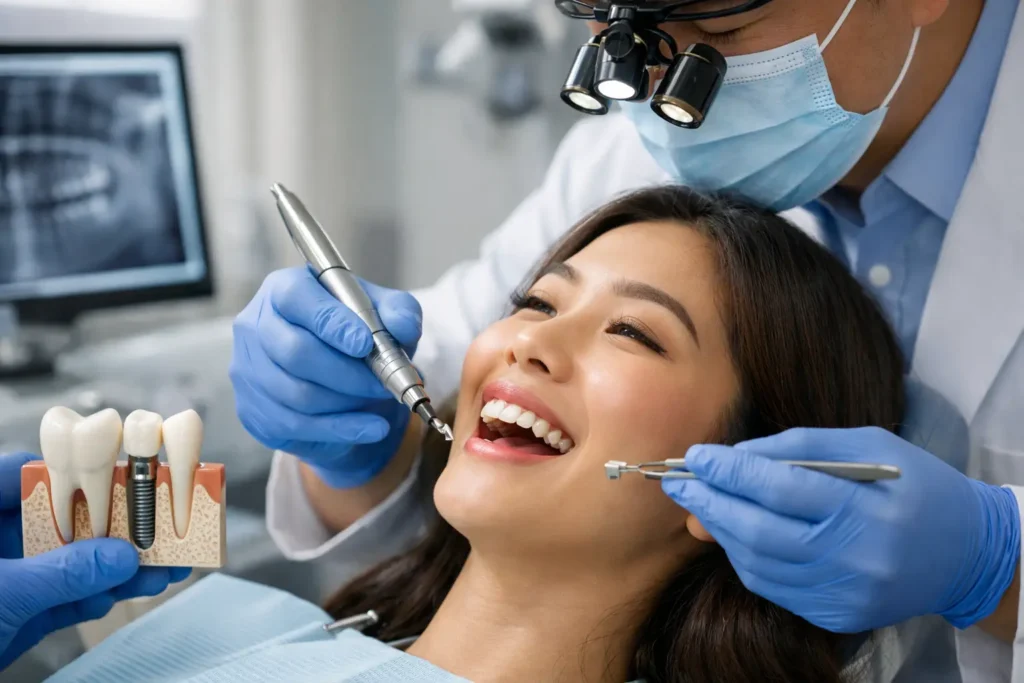
A missing tooth can affect more than your smile. You may avoid chewing on one side, feel self-conscious in photos, or worry that nearby teeth will shift. It is understandable to ask, are dental implants painful, especially if the thought of oral surgery makes you nervous. The reassuring answer is that implant treatment is usually far more comfortable than patients expect, because the procedure is carefully planned and performed with effective local anesthesia.
Most patients do not feel pain while the implant is being placed. You may notice pressure, gentle movement, or vibration, but sharp pain is not something you should have to tolerate. Afterward, some soreness and swelling are normal, but these symptoms are usually manageable with the right aftercare.
Are Dental Implants Painful During Placement?
Dental implant placement is a surgical procedure, but your dentist numbs the treatment area before starting. Local anesthesia prevents pain in the gums and jaw during the procedure. Before treatment begins, your dentist will check that you are fully numb and comfortable.
Once the area is numb, the dentist gently places a small titanium implant into the jawbone. This implant acts as an artificial tooth root. The procedure is precise, and modern digital imaging helps your dentist plan the position of the implant around important structures such as neighboring teeth and nerves.
Patients often describe the experience as strange rather than painful. You may feel pressure as the implant is placed, but you should not feel a sharp or severe sensation. If you do feel discomfort at any point, tell your dentist right away. A caring dental team will pause, reassess the anesthesia, and make sure you are comfortable before continuing.
For patients with strong dental anxiety, additional calming options may be discussed during the consultation. The best approach depends on your medical history, the complexity of your treatment, and how you feel about dental procedures.
What Does Dental Implant Recovery Feel Like?
It is normal to have tenderness after anesthesia wears off. For many patients, discomfort is similar to what they might feel after a tooth extraction. The first two or three days are often when swelling and soreness are most noticeable, then symptoms gradually improve over the following week.
You may experience mild bleeding on the first day, swelling around the gum or cheek, bruising, and sensitivity when chewing near the implant site. These are expected healing responses, not signs that something has gone wrong. Your dentist will provide clear instructions on medication, eating, brushing, and follow-up visits so you know what is normal for your individual case.
Pain relief may involve medication recommended or prescribed by your dentist. Taking it as directed, especially during the first day or two, can help you stay ahead of discomfort. Applying a cold pack to the outside of the cheek in short intervals may also reduce swelling.
The experience varies from person to person. Someone having one straightforward implant placed in healthy bone may recover quickly. A patient who needs a tooth extraction, bone graft, sinus lift, or several implants may have more swelling and need a longer recovery period. Even then, patients are often surprised that the recovery is manageable with proper planning and care.
Why Some Patients Feel More Sore Than Others
The amount of discomfort after an implant is not only about your pain tolerance. It can also depend on the condition of the tooth being replaced, the health of your gums, the amount of available jawbone, and whether additional procedures are needed.
For example, an infected tooth can leave the surrounding tissues irritated before treatment even begins. Removing that tooth and allowing the area to heal may sometimes be the safest first step before implant placement. In other cases, a bone graft is needed to create a stable foundation for the implant. These steps add time to treatment, but they support a stronger, more predictable long-term result.
Smoking, uncontrolled diabetes, and poor oral hygiene can also slow healing and increase the risk of complications. A thorough consultation allows your dentist to identify these factors early and create a treatment plan that protects both your comfort and your implant outcome.
How to Make Dental Implant Healing More Comfortable
Your aftercare matters. A few simple habits can make the first days of recovery easier and help your gums heal well.
Choose soft foods such as yogurt, eggs, soup that is not too hot, mashed vegetables, and soft rice dishes while the site is tender. Avoid chewing directly on the implant area until your dentist tells you it is safe. Hard, crunchy, spicy, or very hot foods can irritate the surgical area in the early stages.
Keep your mouth clean, but be gentle. You may need to avoid vigorous rinsing for the first day. Your dentist may recommend a specific mouth rinse or gentle saltwater rinses after a certain point in recovery. Continue brushing the rest of your teeth carefully, because a clean mouth supports healthy healing.
Rest on the day of your procedure and avoid strenuous exercise for a short period if advised. Physical exertion can increase bleeding and swelling. It is also best to avoid smoking and alcohol, as both can interfere with healing and reduce the chance of successful implant integration.
Follow-up appointments are equally important. Your dentist will check the healing site, monitor how the implant is integrating with the jawbone, and let you know when it is time to move forward with the crown or final restoration.
The Long-Term Benefit Often Outweighs the Short-Term Soreness
Dental implants are designed to feel and function much like natural teeth. Once healing is complete and the final crown is placed, you should be able to smile, speak, and eat with greater confidence. Unlike a removable denture, an implant is fixed in place. Unlike a bridge, it does not usually require preparing the healthy teeth beside the gap.
That does not mean implants are the right choice for every patient. Dentures and bridges can still be excellent options depending on your oral health, budget, treatment goals, and the number of missing teeth. Your dentist should explain each option clearly rather than pushing a one-size-fits-all solution.
For patients who are suitable candidates, an implant can be a valuable long-term investment in comfort, bite function, and smile confidence. The brief recovery period is usually a small part of a result that can last for many years with good home care and regular dental visits.
When to Call Your Dentist After Implant Surgery
Some tenderness and swelling are expected, but worsening symptoms should be checked promptly. Contact your dental clinic if pain becomes severe or increases after several days, bleeding does not settle, swelling worsens instead of improving, you develop a fever, or you notice pus, a bad taste, or an implant that feels loose.
These signs do not always mean the implant has failed, but early assessment is the safest choice. Do not wait and hope that severe symptoms will disappear on their own.
At Ideal Smile, implant planning focuses on careful assessment, clear explanations, and patient comfort at every stage. If you have been putting off treatment because you are worried about pain, a consultation can give you straightforward answers based on your mouth, your health, and your goals. A missing tooth deserves thoughtful care, and you deserve to feel informed before making a decision.
