
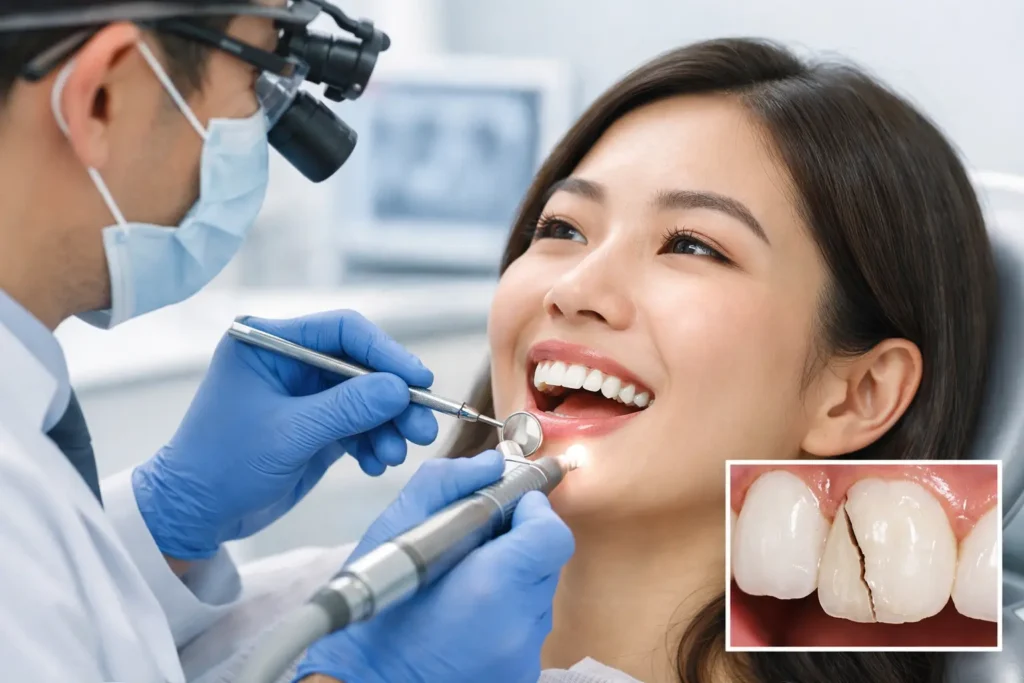
A tooth can crack while biting something surprisingly ordinary: a hard nut, an ice cube, a popcorn kernel, or even a piece of crusty bread when a tooth is already weakened. It may feel like a brief sharp twinge, then disappear. That can make people wonder, can a cracked tooth heal on its own? Unfortunately, a true crack in a tooth does not fuse back together. Prompt dental care can, however, protect the tooth, relieve discomfort, and often prevent the crack from becoming a much bigger problem.
The encouraging news is that not every line or chipped edge means you will need a root canal or extraction. The right treatment depends on where the crack is, how deep it extends, and whether the inner nerve tissue has been affected. An examination and digital X-rays help your dentist make a clear, careful recommendation.
Can a cracked tooth heal naturally?
Teeth are strong, but they do not heal like skin or bone. The outer enamel layer has no living cells that can rebuild a split or seal a crack. Once enamel is broken, the crack remains, even if the pain settles down for a while.
A tooth may feel better because pressure has changed, inflammation has reduced, or you have avoided chewing on that side. That does not mean the crack has repaired itself. Each bite can cause the two sides of a cracked tooth to flex slightly. Over time, that movement may allow the crack to deepen and give bacteria a route toward the sensitive inner pulp.
Your dentist can restore and stabilize the tooth with a filling, bonding, crown, or other treatment. Think of it as protecting a damaged structure before everyday biting forces cause further separation.
Not every tooth line is a serious crack
It is common to notice faint vertical lines on front teeth, especially as we get older. These are often called craze lines. They usually affect only the enamel and may be cosmetic rather than harmful. They do not usually cause pain, and treatment may not be necessary unless appearance is a concern.
A cracked tooth is different. It can cause pain when chewing, sensitivity to cold or sweets, or a sharp sensation when releasing your bite. The symptoms can be inconsistent, which is one reason cracked teeth are sometimes difficult to identify without a dental examination.
A chip is also different from a crack. A small chip may involve only the outer edge of enamel and can often be smoothed or repaired with bonding. A crack can travel deeper into the tooth, sometimes below the gumline, where it requires more careful evaluation.
Signs you should arrange a dental visit soon
A cracked tooth is not always a same-day emergency, but it should not be ignored. Contact a dentist promptly if you notice pain when chewing, sensitivity that lingers after hot or cold drinks, pain that comes and goes without an obvious reason, swelling around the tooth, or a visible broken area.
Severe, constant pain, facial swelling, fever, a bad taste from drainage, or difficulty swallowing need urgent dental assessment. These signs may point to infection. If swelling affects breathing or swallowing, seek emergency medical help immediately.
Children should also be checked after a fall or a hit to the mouth, even when they seem comfortable afterward. A small crack or injury can sometimes affect a developing tooth or expose deeper layers that are not easy to see at home.
How dentists diagnose a cracked tooth
Finding a crack is not always as simple as spotting it in a mirror. Some cracks are extremely fine, sit between teeth, or extend beneath the gumline. Your dentist will ask when the symptoms began, what triggers them, and whether you have recently bitten something hard or experienced trauma.
The examination may include checking the tooth under magnification, testing how it responds to gentle biting pressure, using light to reveal fracture lines, and taking digital X-rays. X-rays are valuable for assessing the roots and surrounding bone, although very small cracks themselves may not always show clearly.
Your dentist will also consider other causes of similar symptoms, such as decay, gum problems, a loose filling, teeth grinding, or sinus pressure affecting upper teeth. Accurate diagnosis matters because treatment should preserve as much healthy tooth structure as possible.
Treatment depends on the depth and location of the crack
For a minor chip or shallow crack, smoothing the rough edge or placing tooth-colored composite bonding may be enough. Bonding can restore the tooth’s shape and reduce the chance of the area catching or spreading.
When a crack affects a larger part of the chewing surface, a crown is often the most dependable option. A crown covers the tooth like a protective cap, holding it together and distributing bite pressure more evenly. This is especially common for back teeth, which handle heavy chewing forces and may already be weakened by a large filling.
If the crack has reached the pulp, the soft tissue containing nerves and blood vessels, root canal therapy may be needed before the tooth is crowned. Root canal treatment removes infected or inflamed tissue, cleans the inside of the tooth, and seals it so the tooth can remain functional. A crown then helps protect it from future fracture.
In some cases, a crack extends too far below the gumline or splits the tooth into separate sections. If the tooth cannot be predictably restored, extraction may be the healthiest choice. Your dentist can then discuss replacement options, such as a bridge, denture, or dental implant, based on your oral health and goals.
The trade-off is simple: earlier treatment is usually more conservative. A tooth that can be protected with bonding or a crown today may become infected or non-restorable if treatment is delayed.
What to do until your appointment
If you suspect a cracked tooth, avoid chewing on that side of your mouth. Choose softer foods, such as eggs, yogurt, soup, rice, fish, or cooked vegetables, until the tooth is assessed. Avoid hard candy, ice, nuts, and sticky foods that can pull on a damaged filling or widen the crack.
Keep the area clean by brushing gently with a soft toothbrush and flossing carefully. If the tooth is sensitive, use lukewarm water and avoid very hot or cold foods. An over-the-counter pain reliever may help when used as directed on the label, but do not place aspirin or other medication directly on the gum or tooth. It can irritate the tissue.
If a piece of the tooth breaks off, save it if possible and bring it to your appointment. A cold compress against the outside of the cheek can help reduce swelling after an injury. Do not try to glue a tooth fragment back yourself.
Can a cracked tooth get worse without pain?
Yes. Some cracks produce no noticeable symptoms at first. This is particularly true when the crack is small, when it is covered by an old filling, or when the tooth is not doing most of the chewing. But teeth are exposed to repeated pressure every day, and small cracks can enlarge over months or years.
People who clench or grind their teeth are at higher risk. Grinding places strong, repeated force on enamel, fillings, and crowns, often while sleeping. If you wake with jaw soreness, frequent headaches, or worn tooth edges, ask your dentist whether a custom night guard could help protect your teeth.
Large fillings, untreated decay, and previous root canal treatment can also leave a tooth more vulnerable to fracture. Regular checkups give your dentist the opportunity to monitor weakened teeth before they turn into painful surprises.
How to reduce your risk of future cracks
Most tooth cracks are not completely preventable, but a few habits make a meaningful difference. Avoid using teeth to open packaging, cut thread, or hold objects. Limit chewing ice and very hard foods. Wear a properly fitted mouthguard for contact sports, and use a night guard if you grind your teeth.
Routine dental visits also matter. A dentist can identify worn fillings, early decay, bite issues, and teeth that may benefit from a protective crown before a major fracture occurs. For families, teaching children early that teeth are for eating, not opening or biting objects, helps establish a healthier habit.
A cracked tooth does not heal by itself, but you do not have to wait for pain to become unbearable. If something feels sharp, sensitive, or different when you bite, a timely dental examination can give you clarity and a practical path to keeping your smile comfortable and strong.

Pingback: Crown or Filling for a Molar: Which Is Right? - Klinik Pergigian Kulim
Pingback: Broken Tooth Restoration: Your Best Options - Klinik Pergigian Kulim
Pingback: Why Does My Crown Hurt? Causes and Next Steps - Klinik Pergigian Kulim