
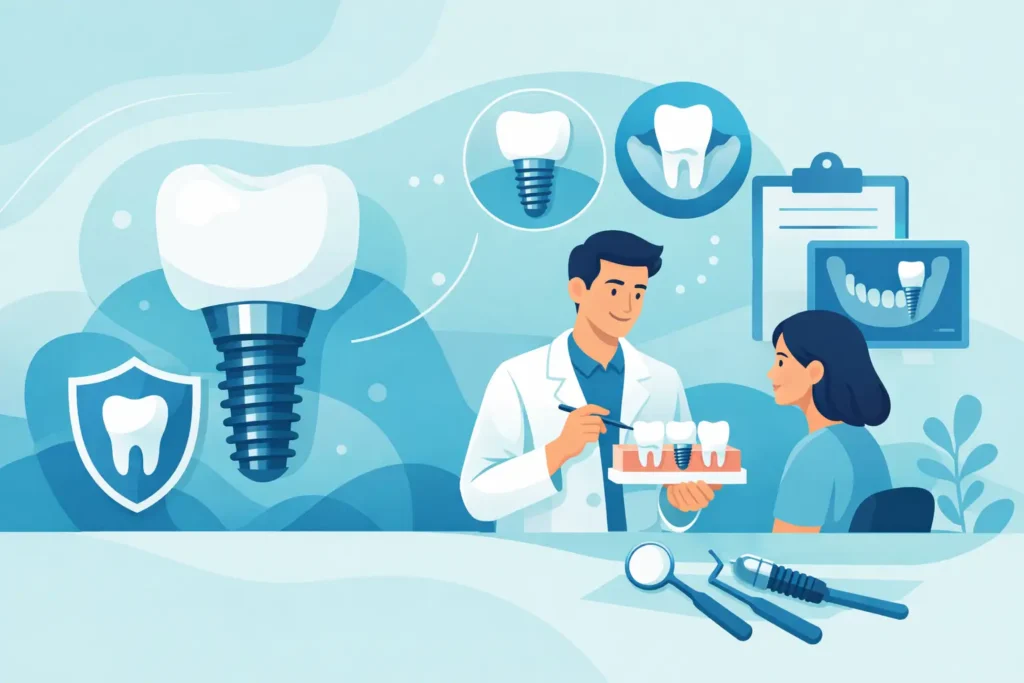
Missing a tooth changes more than your smile. It can affect how you chew, how clearly you speak, and how confident you feel when you laugh or meet people face-to-face. This dental implant treatment guide is designed to give you a clear, honest picture of what implants involve, so you can decide whether they are the right long-term option for you.
Dental implants are often one of the most reliable ways to replace missing teeth because they are built to function like natural tooth roots. But they are not a one-size-fits-all treatment. The best decision depends on your oral health, your bone support, your budget, and your expectations for comfort, appearance, and maintenance.
What a dental implant actually is
A dental implant is a small titanium post placed into the jawbone to act as an artificial root. Once it heals and bonds with the bone, it can support a crown, bridge, or denture. The goal is not just to fill a gap, but to restore stability and biting function in a way that feels more natural than many removable options.
For a single missing tooth, an implant usually supports one crown. If several teeth are missing, implants can also support a bridge or help secure a denture. That flexibility is one reason many patients consider implants when they want a more fixed and confident solution.
Who is a good candidate in this dental implant treatment guide
A good implant candidate usually has healthy gums, enough jawbone to support the implant, and a commitment to keeping the mouth clean during and after treatment. Age alone is not the main issue. What matters more is whether the bone and gums are healthy enough and whether any existing dental problems are under control.
Some patients need preparatory treatment before implants. If there is gum disease, tooth infection, or significant bone loss, those concerns often need attention first. Patients with diabetes, heavy smoking habits, or certain medical conditions can still be candidates, but healing may take longer and treatment planning needs extra care.
This is where a proper dental assessment matters. Digital X-rays and a clinical exam help the dentist evaluate bone levels, spacing, bite pressure, and the condition of nearby teeth. In many cases, the right answer is not simply yes or no. It is yes, but after some preparatory steps.
The treatment process step by step
One reason people hesitate is that implants sound complicated. In reality, the process is structured and usually easier to understand once it is broken down.
1. Consultation and planning
The first visit focuses on diagnosis. Your dentist checks the missing tooth area, reviews your medical history, and assesses whether the implant site has enough bone and space. This stage is also where you discuss goals. Some patients care most about appearance, while others are more concerned with chewing comfort or replacing a failing tooth before it causes more problems.
2. Preparatory treatment if needed
Not every patient can move directly to implant placement. Some need an extraction first. Others may need gum treatment, bone grafting, or time for the area to heal before the implant is placed. This can add time, but it often improves the final result.
3. Implant placement
The implant is placed into the jawbone during a minor surgical procedure. Local anesthesia is commonly used, so the area is numb during treatment. Most patients describe pressure rather than sharp pain. Afterward, mild soreness and swelling are common for a few days, and these are usually manageable with prescribed or recommended medication.
4. Healing and integration
This stage requires patience. The implant needs time to bond with the bone in a process called osseointegration. Healing often takes a few months, depending on the individual case, the location of the implant, and whether any grafting was done. During this time, your dentist monitors healing and makes sure the implant is stable.
5. Final restoration
Once the implant has integrated well, the final tooth replacement is attached. This may be a crown, bridge, or denture component, depending on the plan. The final result should look natural, feel secure, and fit your bite comfortably.
How long does dental implant treatment take?
This is one of the most common questions in any dental implant treatment guide, and the honest answer is that it varies. Some straightforward cases move faster, especially when the bone and gums are healthy and no extra procedures are needed. More complex cases can take several months from start to finish.
If a tooth needs to be removed, or if the bone is too thin and needs grafting, treatment may take longer. That extra time is not wasted time. It is often what helps create a stronger foundation and a better long-term outcome.
Benefits of dental implants
The biggest advantage of implants is stability. Because they are anchored in the bone, they do not shift the way removable dentures can. Many patients also appreciate that implants help preserve jawbone in the missing tooth area, which can reduce the sunken look that sometimes develops after tooth loss.
Implants can also be easier to live with day to day. You do not remove them for cleaning like dentures, and you do not need to depend on neighboring teeth for support the way a traditional bridge often does. For many people, the confidence of eating, speaking, and smiling without worrying about movement is just as valuable as the cosmetic improvement.
Trade-offs and things to consider
Implants have clear benefits, but they are not the perfect answer for every person. Cost is a real factor. Implant treatment usually costs more upfront than dentures or some bridge options. The process also takes longer, and it involves surgery, which not every patient feels ready for.
There are also risks, even when treatment is carefully planned. Infection, delayed healing, implant failure, or bite issues can occur, although they are less likely when the case is properly assessed and maintained. Smoking, uncontrolled gum disease, and poor oral hygiene can all raise the risk of complications.
That is why good treatment planning matters more than rushing into the procedure. A trustworthy dentist will tell you not only the benefits, but also whether your case has limitations or added risks.
What recovery is usually like
Recovery after implant placement is often more manageable than patients expect. Most people can return to light daily activities fairly quickly, though they may need to avoid hard chewing on that side for a period of time. The first few days usually involve some tenderness, mild swelling, and a need for softer foods.
Healing instructions matter. Keeping the area clean, taking medications as directed, and attending follow-up visits all support a smoother recovery. If something feels unusual, such as worsening pain, persistent swelling, or a loose feeling, it is best to contact the clinic early rather than wait.
How to care for an implant
An implant still needs regular care, even though it cannot get a cavity like a natural tooth. The gums and surrounding bone must stay healthy for the implant to last well. Daily brushing, flossing or cleaning between teeth, and routine dental visits remain essential.
This surprises some patients who assume implants are maintenance-free. They are not. They are low-maintenance compared with some alternatives, but they still rely on healthy habits and professional monitoring.
Questions worth asking before you start
Before beginning treatment, ask how many visits are likely, whether bone grafting may be needed, what type of restoration is planned, and what the total timeline may look like. It is also reasonable to ask about costs, expected recovery, and what happens if healing takes longer than planned.
A good consultation should leave you feeling informed, not pressured. At a family-focused clinic like Ideal Smile, the goal is not simply to place an implant. It is to recommend treatment that fits your health, your comfort level, and your long-term oral needs.
Tooth loss can feel discouraging, but it does not have to stay that way. With the right assessment and a careful plan, dental implants can be a strong, natural-looking option that helps you eat comfortably, smile confidently, and move forward with more peace of mind.

Pingback: Implant vs Dentures Comfort: What Feels Better? - Klinik Pergigian Kulim
Pingback: Implant Supported Dentures Review: Are They Worth It? - Klinik Pergigian Kulim