
A tiny white spot near the gumline can be easy to miss. So can a child who suddenly avoids cold drinks, chews on one side, or says a tooth hurts only at bedtime. This guide to childhood tooth decay helps parents recognize those early clues, understand why cavities develop, and take practical steps before a small concern becomes pain, infection, or a more complex treatment.
Tooth decay is common, but it is not something families simply have to accept. With daily habits, sensible food choices, fluoride protection, and regular dental visits, many childhood cavities can be prevented or found while they are still small.
What childhood tooth decay actually is
Tooth decay, also called dental caries or cavities, occurs when bacteria in the mouth use sugars and starches from food and drinks. These bacteria produce acids that repeatedly weaken the enamel, the hard outer layer of a tooth. Given enough time, the enamel breaks down and a cavity forms.
Decay does not usually begin as a visible hole. It often starts with a chalky white area on the tooth, especially along the gums or between teeth. At this stage, the surface may sometimes be strengthened through better brushing, fluoride, and dietary changes. Once a cavity has formed, however, the damaged tooth structure does not grow back. A filling may be needed to restore it.
Baby teeth matter just as much as adult teeth. They help children chew comfortably, speak clearly, and hold space for permanent teeth to come in properly. An untreated baby tooth can also become painful or infected, affecting sleep, eating, school, and overall well-being.
Why children get cavities
A cavity is rarely caused by one sweet snack. It is usually the pattern of frequent exposure that matters most. Each time a child sips a sweet drink or eats a sugary, sticky snack, the teeth are exposed to acids for a period of time. Frequent snacking gives the mouth less opportunity to recover.
Common contributors include juice, sweetened milk, sports drinks, soda, sweet tea, flavored yogurt, candy, cookies, and sticky dried fruit. Even foods that seem nutritious can be hard on teeth when they are eaten or sipped throughout the day. A child who drinks milk at meals is in a different situation from a child who carries a sweetened drink around for hours.
Brushing challenges are another factor. Young children do not have the hand control to clean thoroughly on their own. Plaque can remain near the gumline, on back molars, and between teeth where a toothbrush cannot reach. Crowded teeth, deep grooves on molars, enamel that is naturally weaker, and dry mouth can also increase risk.
Bedtime deserves special attention. After brushing, only water should be offered unless a dentist has given different advice for a specific medical need. Falling asleep with milk, formula, juice, or a sweet drink allows sugars to remain on the teeth when saliva flow is lower.
Early signs parents should not ignore
A child may have decay without complaining of pain. Regular dental examinations are valuable because a dentist can identify changes that are difficult to see at home, including decay between teeth. Still, parents may notice warning signs.
Look for white, brown, or black areas on a tooth; pits or holes; food repeatedly getting caught in the same place; sensitivity to cold, sweets, or chewing; bad breath that persists despite brushing; or a child avoiding certain foods. Pain that wakes a child at night, facial swelling, fever, or swelling near the gums needs prompt dental attention. These can be signs that decay has reached the inner part of the tooth or that an infection is developing.
Do not wait for severe pain before booking an appointment. Children often adapt by chewing on the other side or avoiding uncomfortable foods. By the time they clearly describe a toothache, the problem may have progressed.
A practical guide to childhood tooth decay prevention
The most effective routine is not complicated, but it needs consistency. Brush twice a day for two minutes with fluoride toothpaste. For children under age 3, use a rice-grain-sized smear. From ages 3 to 6, use a pea-sized amount. Encourage children to spit out toothpaste rather than swallow it, and supervise brushing until they can reliably clean all surfaces well, often around ages 7 or 8.
Parents should do the final brushing, especially at night. Start with the outer surfaces, then the inside surfaces, the chewing surfaces of back teeth, and the gumline. It is easy to focus on the front teeth because they are visible, while molars are where many cavities start.
Clean between teeth once a day when teeth touch each other. Flossing may feel difficult at first, but floss picks can make the task easier for some families. If there is no space between two teeth, a toothbrush cannot clean that contact area effectively.
Food and drink choices matter, but strict perfection is not the goal. Keep sweet foods and drinks mainly with meals rather than offering them frequently between meals. Water is the best everyday drink. If your child has juice, offer a small amount with a meal rather than allowing constant sipping. Avoid using food or sweets as a reward whenever possible, since this can make sugary snacks feel more desirable.
A helpful routine includes these four habits:
- Brush with fluoride toothpaste morning and night, with adult help.
- Offer water between meals and after snacks.
- Keep sweet drinks and sticky treats occasional rather than all-day choices.
- Schedule regular dental checkups, even when teeth look healthy.
Fluoride is one of the strongest tools for preventing cavities because it helps enamel resist acid attacks and can support early repair. The right amount depends on a child’s age, cavity risk, drinking water, and ability to spit. A dentist can recommend whether additional fluoride treatment is appropriate.
What happens if your child already has a cavity?
Treatment depends on the size and location of the decay, the child’s age and comfort level, and whether the nerve inside the tooth is affected. Early enamel changes may be monitored or treated with preventive fluoride measures. A small cavity may need a filling. If decay reaches the nerve, a baby tooth may require pulp treatment or extraction to remove infection and protect the developing permanent teeth.
It is understandable for parents to worry about how their child will cope in the dental chair. A child-friendly appointment should move at a calm pace, using clear language and allowing the child to become familiar with the setting. Treatment decisions should balance the need to stop disease with what is appropriate for the child’s stage of development and long-term dental health.
Sometimes parents ask whether a decayed baby tooth can simply be removed because it will fall out eventually. It depends on which tooth is involved and how close it is to naturally being lost. Removing a baby tooth too early can allow nearby teeth to shift, which may affect spacing for adult teeth. A dentist can explain whether preserving the tooth, extracting it, or using a space maintainer is the better choice.
Making dental visits feel normal
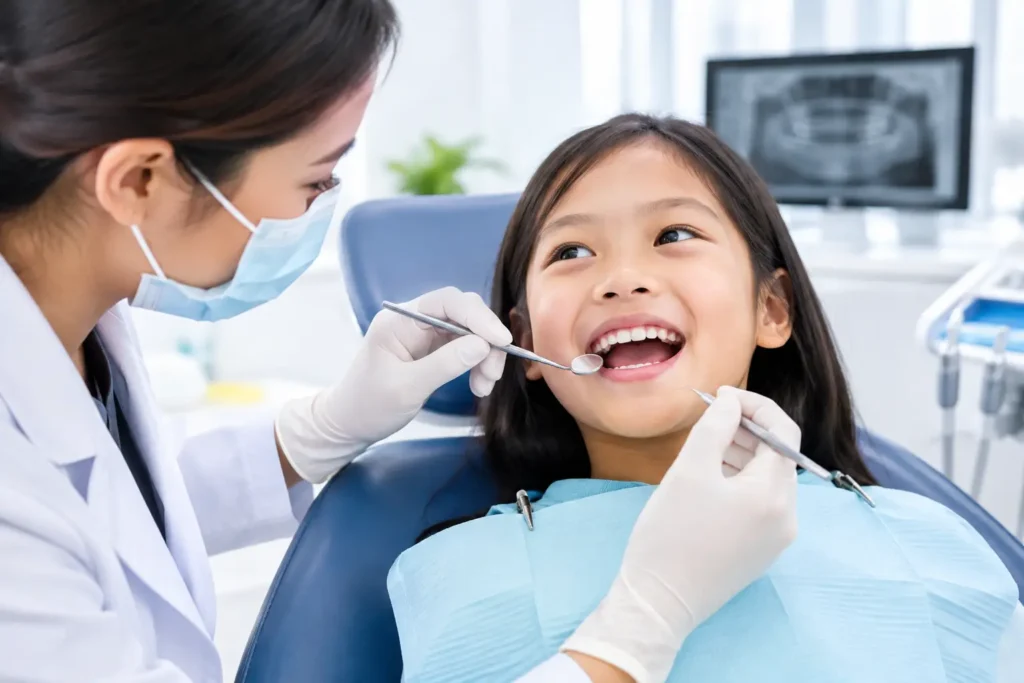
The best first dental visit is often one that happens before there is pain. When children only see a dentist during an emergency, they can associate dental care with discomfort and worry. Routine visits make the experience familiar and give parents time to ask questions about brushing, diet, thumb sucking, tooth eruption, or orthodontic development.
Use simple, positive language at home. You can tell your child that the dentist will count their teeth and help keep their smile strong. Avoid promising that a visit will not hurt, since children may need treatment and trust matters. Instead, reassure them that the dental team will explain what is happening and help them feel comfortable.
For families in Kulim, Ideal Smile can assess a child’s cavity risk, examine developing teeth, and provide appropriate preventive or restorative care in a supportive setting. Bringing a child in early gives everyone more options and often makes care simpler.
A healthy smile is built through small moments: helping with nighttime brushing, choosing water after play, noticing a new spot on a tooth, and booking a checkup before discomfort takes over. Those habits give children more than cavity prevention. They help them learn that caring for their teeth is a normal part of caring for themselves.
