
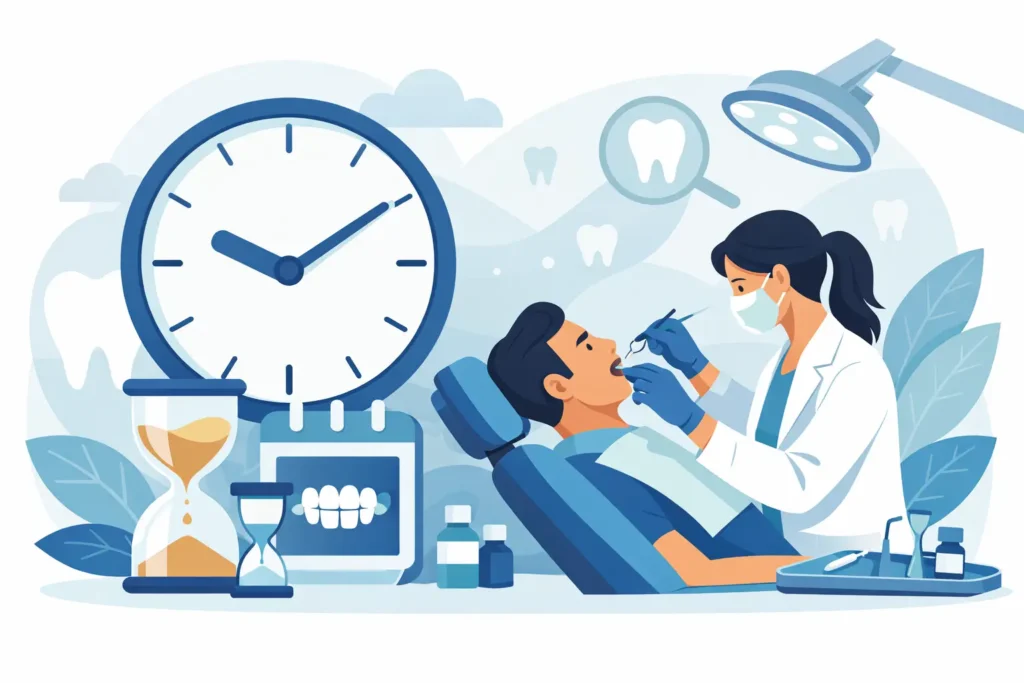
If you have ever delayed a dental visit because your day already feels packed, you are not alone. One of the most common questions patients ask is how long does a comprehensive dental exam take, especially when they are booking around work, school pickup, or a child’s routine.
The short answer is that a comprehensive dental exam usually takes about 45 minutes to 90 minutes. That range depends on whether you are a new patient, when your last exam was, whether digital X-rays are needed, and if the dentist finds anything that needs a closer look. For some people, the visit is fairly straightforward. For others, it takes longer because a thorough exam is meant to do more than just glance at the teeth.
How long does a comprehensive dental exam take for most patients?
For many adults, a comprehensive dental exam falls near the one-hour mark. If you are visiting a clinic for the first time, expect closer to 60 to 90 minutes. That gives enough time for medical history review, digital imaging if needed, a full evaluation of the teeth and gums, and a discussion about any next steps.
If you are an existing patient with recent records and no major concerns, the appointment may be shorter. Still, a true comprehensive exam is more detailed than a quick checkup. It is designed to give the dentist a full picture of your oral health, not just identify obvious cavities.
That distinction matters. A routine periodic exam during regular maintenance visits is often shorter because the dentist is reviewing an already established history. A comprehensive exam is usually more in-depth, especially if it has been years since your last visit or if you are coming in with pain, sensitivity, or cosmetic concerns.
What happens during a comprehensive dental exam?
A lot of patients hear the word “exam” and picture a dentist looking at the teeth for a few minutes. In reality, a comprehensive exam includes several parts, and each one helps build a clearer diagnosis.
Medical and dental history review
This step may only take a few minutes, but it is important. The dentist will want to know about medications, health conditions, pregnancy, allergies, and past dental treatment. Even issues that seem unrelated, such as diabetes, dry mouth, or grinding at night, can affect what is happening in your mouth.
If you are a new patient, this part often takes a little longer because the team is getting to know you. That extra time is useful. It helps the dentist recommend treatment that fits your needs, comfort level, and long-term goals.
Digital X-rays and imaging
Not every visit needs a full new set of X-rays, but many comprehensive exams include them. Digital X-rays help detect problems that cannot be seen during a visual exam alone, such as decay between teeth, bone loss, impacted teeth, infections, or changes around old fillings and crowns.
This part usually adds around 10 to 20 minutes, depending on how many images are needed and how current your records are. If you recently had good-quality X-rays and they are still clinically useful, your appointment may move faster.
Gum and oral health assessment
A comprehensive exam also looks closely at your gums, bite, jaw, and soft tissues. The dentist may assess for gum inflammation, pocket depth, recession, signs of clenching, and changes in the cheeks, tongue, or roof of the mouth. This is part of good preventive care, not just a formality.
Patients are sometimes surprised that an exam includes more than teeth. But oral health is connected. A cracked tooth, gum disease, jaw strain, and worn enamel can all influence one another.
Tooth-by-tooth examination
This is the part most people expect. The dentist checks for cavities, worn fillings, cracked teeth, enamel erosion, bite alignment issues, and signs of infection. If you have crowns, bridges, implants, dentures, or braces, those will also be evaluated.
If everything looks stable, this section may be relatively quick. If the dentist identifies several areas of concern, more time may be needed to document findings and explain what they mean.
Treatment discussion
This is one of the most valuable parts of the visit and one of the main reasons timing varies. A good dentist does not simply identify problems and move on. They explain what is happening, whether treatment is urgent, what the options are, and what can wait.
If your exam shows healthy teeth and gums, the conversation may be brief. If you need fillings, gum treatment, a wisdom tooth evaluation, cosmetic work, or a more advanced plan such as crowns or implants, expect a longer discussion. That is time well spent, because clear explanations help patients make confident decisions.
What can make the appointment shorter or longer?
The biggest factor is whether this is your first visit or a returning visit. New patients usually need more time because there are no baseline records and the dentist is building a complete picture from scratch.
Your current oral health also matters. If you have pain, swelling, broken teeth, bleeding gums, or several old restorations, the dentist may need more time to assess everything properly. On the other hand, if you come in regularly and your mouth is generally healthy, the process is often smoother.
Children can sometimes move through the visit quickly, but it depends on their age and comfort level. A calm child with prior dental experience may do very well. A toddler or anxious child may need a gentler pace. The same applies to adults who feel nervous about dental care. In a patient-centered clinic, comfort is part of the appointment, not an extra.
Another factor is whether the exam is combined with cleaning. Some clinics schedule comprehensive exams and cleaning in the same visit when time allows and your gum health makes that appropriate. Others may separate them, especially if the exam finds signs of gum disease or the schedule needs more time for diagnosis first.
Is a comprehensive dental exam the same as a regular checkup?
Not always. People often use the terms interchangeably, but there is a difference.
A regular checkup is usually a shorter follow-up visit for an existing patient who has already had a full baseline exam. The dentist reviews changes since the last appointment and checks for new issues. A comprehensive dental exam is broader. It is often done for first-time patients, patients returning after a long gap, or anyone needing a full reassessment.
That is why asking how long does a comprehensive dental exam take can lead to different answers than asking about a routine six-month visit. The comprehensive version is meant to be more detailed, and that detail helps prevent missed problems.
Should you set aside extra time?
Yes, it is smart to leave a little room in your schedule. Even if the clinical portion takes about an hour, you may need extra time for registration, questions, or discussing treatment plans. If you are seeing the dentist before work or between errands, giving yourself a buffer makes the visit less stressful.
This matters even more if you are bringing a child or visiting because of a specific concern. Pain, swelling, a loose filling, or a wisdom tooth issue can sometimes lead to same-day recommendations that require more conversation than expected.
For families, planning ahead helps. If one parent is booking for multiple household members, asking the clinic how they structure first visits can save time and make the day easier.
How to make your dental exam go more smoothly
A little preparation can make the appointment feel much easier. Bring an updated medication list, be ready to share your dental history, and mention concerns clearly, even if they seem minor. Sensitivity when drinking cold water, occasional jaw clicking, or bleeding when flossing are all useful details.
If you have old X-rays or treatment records from another clinic, it may help to send them in advance when possible. And if you feel nervous, say so. A caring dental team will usually adjust the pace, explain each step, and help you feel more comfortable.
At a modern family practice such as Ideal Smile, that conversation matters just as much as the exam itself. Patients tend to feel more at ease when they know what is happening and why.
When a longer exam is actually a good sign
Many patients assume a fast appointment is better. Sometimes it is simply efficient. But sometimes a slightly longer comprehensive exam is exactly what you want.
Taking time to review X-rays carefully, assess the gums thoroughly, and explain treatment options shows attention to detail. That can be especially important if you have not had dental care in a while, if you are considering cosmetic treatment, or if you have recurring issues that were never fully addressed before.
A comprehensive dental exam should leave you with clarity. You should understand the condition of your teeth and gums, what needs attention now, and what can be monitored over time. When that happens, the appointment feels less like lost time and more like an investment in your health.
If you are planning your next visit, think of a comprehensive exam as time set aside to get answers, not just a quick look in the chair. For most people, an hour is a realistic expectation, and the peace of mind that comes with a careful exam is usually worth every minute.

Pingback: How Often Can You Do a Comprehensive Dental Exam? - Klinik Pergigian Kulim
Pingback: When Should Wisdom Teeth Be Removed? - Klinik Pergigian Kulim
Pingback: What Kulim Dental Fillings Treatment Involves - Klinik Pergigian Kulim
Pingback: What Happens During Dental Scaling? A Clear Guide - Klinik Pergigian Kulim