
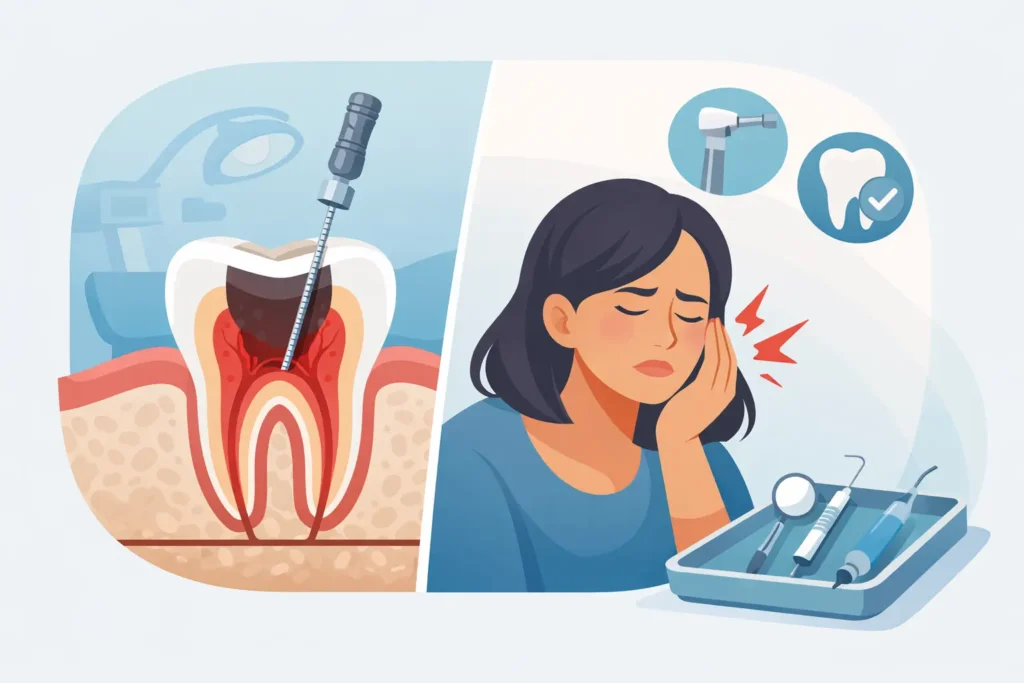
If you have been told you need a root canal, the first question that usually comes to mind is simple: is root canal treatment painful? For many patients, the fear comes from stories they have heard, not from what modern treatment actually feels like. The reality is that root canal treatment is designed to relieve pain caused by infection, not create more of it.
A badly infected or inflamed tooth can throb, keep you awake, and make even a sip of water uncomfortable. In that situation, the procedure itself is often the step that finally brings relief. With current anesthetics, proper technique, and careful planning, most patients say the treatment feels similar to getting a filling, just with more time and precision involved.
Is root canal treatment painful during the procedure?
In most cases, no. During the procedure, the tooth and surrounding area are numbed with local anesthetic so you should not feel sharp pain. You may notice pressure, vibration, or the sensation of the dentist working inside the tooth, but that is different from pain.
This is one reason many people are surprised afterward. They expect a severe experience, then realize the discomfort they feared was actually coming from the infected tooth before treatment started. Once the area is numb, the goal is to make the procedure as comfortable and controlled as possible.
That said, every case is a little different. A tooth with significant infection, swelling, or deep inflammation can sometimes be harder to fully numb at first. When that happens, an experienced dentist may use additional anesthetic techniques and work carefully to help you stay comfortable throughout the appointment.
Why root canals have a painful reputation
Root canals have had a bad image for years, and much of it is outdated. People often connect the name of the procedure with the pain of the infection that made the procedure necessary in the first place.
It is an easy mix-up. If someone waits until the toothache is severe, the tooth is already in trouble. The pressure from infection inside the tooth can be intense. By the time they arrive for treatment, they may already be exhausted, anxious, and sensitive to every sensation. That emotional stress can make the whole experience seem worse than it is.
Older stories also tend to stay around longer than current reality. Modern dentistry uses better imaging, more reliable local anesthesia, and improved instruments that make treatment more precise. For patients, that usually means less discomfort during the procedure and a smoother recovery afterward.
What you may feel after a root canal
The more honest answer to is root canal treatment painful is this: the procedure itself is usually well managed, but some tenderness afterward is normal.
Once the numbness wears off, it is common to feel mild soreness for a few days. The tooth and surrounding tissues may feel bruised or sensitive, especially when biting. This can happen because the area around the root has already been inflamed before treatment, and it needs time to settle.
For most patients, that post-treatment discomfort is manageable with the advice and medication recommended by the dentist. It should gradually improve, not intensify. If pain becomes stronger instead of better, or if swelling develops, that is a sign to contact the clinic for review.
When a root canal may feel more uncomfortable
Not every root canal feels exactly the same. The level of discomfort can depend on the condition of the tooth, how long the infection has been present, and whether there is swelling around the root.
A tooth that is treated early is often simpler to manage. A tooth that has been painful for weeks, has a dental abscess, or hurts when you touch it may need more careful pain control and may stay sore a little longer afterward. Patients who are very anxious may also experience the treatment as more difficult, even when the procedure is clinically going well.
This is why timing matters. Delaying treatment usually does not make the tooth calm down for good. More often, it gives the infection time to spread and the pain time to worsen.
What actually happens during root canal treatment
Understanding the process often helps reduce fear. Root canal treatment is done to remove infected or damaged pulp from inside the tooth. After the area is numbed, the dentist creates a small opening, cleans the canals inside the roots, disinfects the space, and seals it.
The goal is to save the natural tooth while removing the source of infection and pain. In many cases, the tooth is then restored with a filling or crown, depending on how much structure remains and how much strength it needs.
Patients sometimes imagine the treatment as something aggressive, but in practice it is controlled and methodical. You are not expected to just endure pain through the appointment. Comfort is part of the treatment plan.
How dentists help keep root canals comfortable
A caring dental team does more than just numb the tooth. Comfort comes from good communication, careful technique, and knowing how to respond if a patient feels nervous or sensitive.
At a modern family dental clinic, this may include digital X-rays for clear planning, updated equipment for precision, and a step-by-step explanation so the patient knows what to expect. Even simple things matter, like checking whether you are still comfortable during the procedure instead of assuming everything is fine.
For families and working adults, reassurance is especially important. Many people are not only worried about pain. They are worried about losing control, not understanding the process, or having a bad experience that stays with them. A dentist who listens and explains clearly can make a significant difference.
Root canal vs tooth extraction – which hurts more?
Some patients think it might be easier to remove the tooth instead of having a root canal. In certain cases, extraction is the right treatment, but it is not automatically the easier or less painful option.
A root canal is meant to preserve your natural tooth. That usually helps maintain normal chewing, bite balance, and appearance. Extraction may solve the immediate infection, but it can create a new decision about replacing the missing tooth with a bridge, denture, or implant. That can mean more treatment, more healing, and more cost over time.
In terms of discomfort, both procedures can be managed well with local anesthesia. The best choice depends on the condition of the tooth, the surrounding bone and gums, and whether the tooth can realistically be restored for long-term function.
Signs you should not wait any longer
If you have lingering tooth pain, sensitivity that stays after hot or cold drinks, swelling near the gums, pain when biting, or a darkening tooth, it is worth having the tooth examined. Sometimes the pain comes and goes, which makes people think the problem has resolved. It often has not.
Infections inside the tooth can progress quietly and then flare up again. Seeking treatment earlier usually gives you more options and can make the overall experience easier. For patients in Kulim looking for reassurance, choosing a clinic that combines experience, modern equipment, and a patient-first approach can make a real difference to how comfortable treatment feels.
How to prepare if you feel nervous
If dental treatment makes you anxious, say so before the appointment starts. This is not unusual, and it gives the dentist a chance to explain the plan, pace the visit appropriately, and help you feel more in control.
It also helps to avoid building the appointment up in your mind as something extreme. Root canal treatment is a common restorative procedure. For most people, the bigger problem is untreated infection, not the treatment itself.
If you have had a difficult dental experience in the past, share that too. Good care is not only about treating the tooth. It is also about understanding the patient sitting in the chair.
The short answer is that root canal treatment should not be painful in the way most people fear. It is usually the solution to pain, not the cause of it. If a tooth is giving you warning signs, getting it checked sooner can spare you a lot of discomfort later and help you keep your natural smile with confidence.

Pingback: Comprehensive Dental Exam Guide for Patients - Klinik Pergigian Kulim