
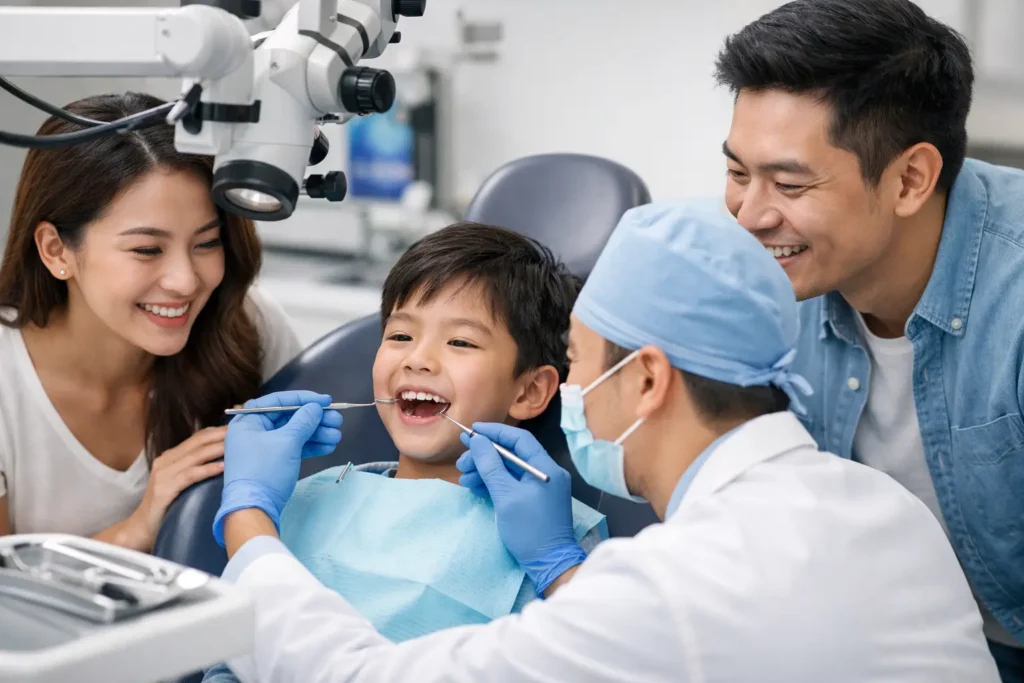
A child who suddenly avoids chewing, a parent with bleeding gums, and a grandparent whose denture no longer feels secure may all need different care. Yet they share one need: a trusted dental plan that prevents small concerns from becoming painful, complicated problems. This family dental care guide explains how to protect every smile at home, when to arrange a visit, and how to make dental care feel less stressful for every generation.
Family Dental Care Guide: Start With Prevention
The strongest family dental routine is not built around emergencies. It is built around regular habits, early checkups, and honest conversations with a dentist before discomfort takes over. Preventive care can help identify decay, gum inflammation, bite concerns, worn restorations, and developing issues before they require more extensive treatment.
For most families, brushing twice daily with fluoride toothpaste and cleaning between the teeth once a day are the foundation. The technique matters as much as the products. A rushed brush that misses the gumline and back teeth will not remove plaque effectively, even if it happens twice a day.
Children need supervision until they can brush carefully on their own, which is often later than parents expect. A child may be able to hold a toothbrush well but still miss the areas where cavities commonly start. For younger children, use only a small smear of fluoride toothpaste. Older children can use a pea-sized amount and should be encouraged to spit rather than swallow.
Adults benefit from the same basics, but dry mouth, medications, smoking, pregnancy, diabetes, and previous dental work can raise the risk of cavities or gum disease. This is why a one-size-fits-all schedule does not always work. Your dentist may recommend more frequent cleanings or checkups if your gums bleed easily, plaque builds up quickly, or you have a history of tooth decay.
Make Dental Visits Routine, Not a Last Resort
A dental visit should not begin only when someone has severe pain. Regular checkups give your dentist a chance to examine the teeth, gums, bite, and existing fillings, crowns, or dentures. Professional cleaning and scaling removes hardened buildup that home brushing cannot remove.
Digital X-rays may also be recommended when clinically appropriate. They can show areas between teeth, below fillings, around roots, or beneath the gumline that cannot be assessed fully with a visual examination alone. Not every patient needs the same X-rays at the same interval. The decision should reflect age, symptoms, oral health history, and individual risk.
For families in Kulim, choosing one clinic that can care for children, adults, and older relatives can make follow-up simpler. Familiarity also helps. When a dentist knows a patient’s history, they can better notice changes in a tooth, restoration, gum condition, or bite over time.
Helping children feel comfortable from the beginning
A child’s early visits shape how they feel about dental care later. The goal is not to force a perfect appointment. It is to help the child become familiar with the environment, dental chair, sounds, and friendly conversation in a calm setting.
Avoid using dental appointments as a threat or promising that nothing will happen. A better approach is simple and truthful: the dentist will count teeth, check how they are growing, and help keep them strong. If treatment is needed, the dental team can explain it in age-appropriate language and guide parents on how to prepare.
Parents should also be mindful of frequent snacking and sweetened drinks. It is not only the amount of sugar that affects teeth but how often teeth are exposed to it. Sipping sweet drinks throughout the day gives bacteria repeated fuel to produce acid. Water between meals is usually the kinder choice for teeth.
Supporting teens through changing smiles
The teenage years often bring new dental needs. Permanent teeth are in place, orthodontic concerns may become more visible, and busy school schedules can make routines inconsistent. Braces or other orthodontic treatment may be appropriate for some teens, but timing depends on the bite, jaw growth, tooth position, and the patient’s ability to maintain good cleaning habits.
Orthodontic treatment is an investment in function as well as appearance. Crooked teeth can be harder to clean, while certain bite problems may cause uneven wear or difficulty chewing. Still, braces are not automatically necessary for every child. A professional assessment provides a clearer answer than comparing one smile with another.
Teenagers who play contact sports should also discuss a properly fitted mouthguard. It can reduce the risk of broken or knocked-out teeth during training and games.
Know When a Problem Needs Prompt Care
Tooth pain is a signal, not a diagnosis. A cavity, cracked tooth, gum infection, erupting wisdom tooth, or sinus-related issue can all feel similar at first. Trying to manage pain for days with home remedies may delay the care needed to save a tooth or stop an infection from worsening.
Arrange a dental appointment promptly if a family member has persistent toothache, facial swelling, bleeding that does not settle, a loose adult tooth, a chipped or broken tooth, or sensitivity that lingers after hot or cold foods. If there is significant swelling, trouble breathing or swallowing, uncontrolled bleeding, or a serious facial injury, seek urgent medical attention immediately.
A knocked-out permanent tooth needs fast action. Handle it by the crown, not the root, gently rinse away visible dirt if needed, and seek urgent dental care. Do not reinsert a baby tooth, as this can damage the developing adult tooth beneath it.
When a tooth is infected or its nerve is severely inflamed, root canal therapy may be recommended to remove infection and preserve the natural tooth. In other cases, extraction is the healthier choice, especially if the tooth cannot be restored predictably. The best treatment depends on the tooth’s condition, surrounding bone and gums, overall health, and long-term function.
Plan for Adult and Senior Dental Needs
As adults age, dental care often becomes less about one isolated cavity and more about maintaining a complete, comfortable, functional smile. Old fillings can wear down, crowns may need monitoring, gums can recede, and missing teeth can affect chewing and confidence.
Replacing a missing tooth is not always urgent, but it is worth discussing. A gap may allow nearby teeth to shift, change how a person bites, or make eating less comfortable. Options can include a bridge, denture, or dental implant. Each has different requirements, cost considerations, treatment timelines, and maintenance needs.
Dental implants can provide a stable replacement for suitable patients, but they require healthy gums, adequate bone support, and careful planning. Dentures can be a practical option for replacing several or all missing teeth, especially when surgery is not preferred or appropriate. Neither option is simply better for everyone. A detailed consultation helps families weigh comfort, appearance, durability, health factors, and budget realistically.
Cosmetic concerns deserve the same thoughtful approach. Whitening can brighten natural teeth, but it will not change the color of crowns, fillings, or veneers. Before whitening, teeth and gums should be checked for decay, cracks, or sensitivity. A healthy mouth creates the best foundation for a confident smile.
Build a Family Routine That Actually Lasts
The best routines are easy enough to repeat on busy mornings and tired evenings. Keep toothbrushes where they are visible, replace them when bristles become worn, and make brushing part of the same daily rhythm as bathing or bedtime. For adults caring for young children or elderly relatives, shared routines can provide useful reminders without making anyone feel monitored.
Food choices matter, but perfection is not required. A family can enjoy treats while still protecting teeth by limiting frequent sugary snacks, choosing water often, and avoiding brushing immediately after acidic drinks. Waiting about 30 minutes after acidic foods or beverages gives saliva time to help rebalance the mouth before brushing.
A dependable dentist should be part of this routine, not someone you see only when a problem becomes unbearable. At Ideal Smile, care is centered on careful assessment, clear explanations, and treatment plans that support long-term oral health. Your family deserves dentistry that feels professional, reassuring, and focused on what will serve each smile well over time.
A healthy smile is built in ordinary moments: a child learning to brush, a parent keeping a checkup appointment, an older adult speaking up about discomfort. Start with the next small step, and let that step protect the years ahead.
