
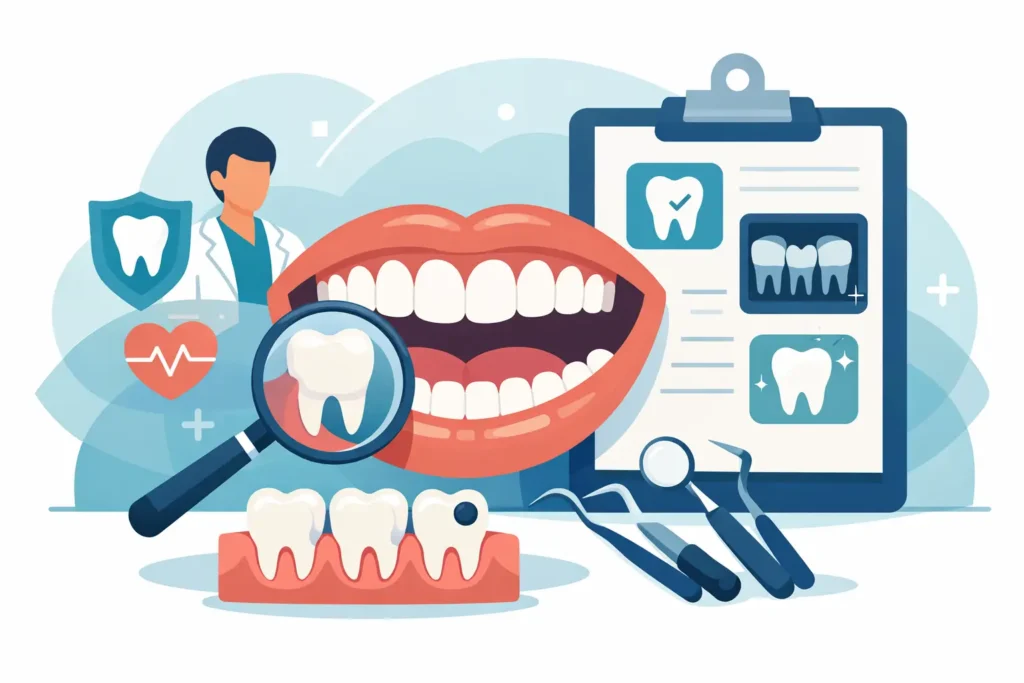
A small cavity, early gum inflammation, or a cracked filling rarely starts with obvious pain. That is why a comprehensive oral health assessment matters. It gives your dentist a full picture of what is happening in your mouth before a minor issue turns into a more stressful and expensive problem.
For many patients, the word assessment sounds more complicated than it really is. In practice, it is a thorough dental evaluation designed to check the health of your teeth, gums, bite, jaw, and surrounding tissues. It is not only about finding decay. It is about understanding your current condition, your risks, and the kind of care that will protect your smile over time.
What a comprehensive oral health assessment includes
A comprehensive oral health assessment looks beyond the surface. Your dentist examines visible concerns such as cavities, plaque buildup, and worn restorations, but also checks for less obvious issues like early gum disease, bite imbalance, or changes in the soft tissues of the mouth.
A typical visit may include a review of your dental and medical history, because your general health can affect your oral health more than many people realize. Conditions such as diabetes, pregnancy-related hormonal changes, dry mouth, and certain medications can all influence your risk of decay or gum problems.
Your dentist will usually assess the condition of each tooth, existing fillings or crowns, and areas that trap food or are difficult to clean. The gums are checked for signs of inflammation, bleeding, recession, or pockets that may suggest periodontal disease. If needed, digital X-rays help reveal problems that cannot be seen during a visual exam, such as decay between teeth, bone loss, infection, or impacted teeth.
The assessment may also include an evaluation of your bite and jaw function. If you have headaches, jaw clicking, clenching, or uneven tooth wear, these signs can point to pressure issues that affect comfort and long-term tooth stability.
Why this kind of exam matters more than a quick checkup
A short routine visit can be useful when everything is stable, but there are times when a more detailed evaluation is the better choice. If you are visiting a new clinic, have not had a dental exam in a long time, are dealing with repeated dental problems, or are considering treatment such as braces, crowns, implants, or dentures, a fuller assessment gives a much safer starting point.
This matters because dental problems often connect to one another. A broken tooth may be linked to grinding. Bleeding gums may be made worse by crowding or old restorations that no longer fit well. Tooth sensitivity might come from decay, gum recession, enamel wear, or a cracked tooth. Treating only the visible symptom can miss the real cause.
A comprehensive approach helps avoid patchwork dentistry, where one issue is fixed without addressing the bigger picture. That does not mean every patient needs major treatment. Often, the best result is simply clarity. You understand what needs attention now, what can be monitored, and how to prevent future problems.
What dentists look for during a comprehensive oral health assessment
Dentists are not only searching for disease. They are also assessing patterns, risk, and function. That wider view is what makes the appointment valuable.
Tooth decay and damaged restorations
Cavities are still one of the most common findings, but the real concern is often where and why they keep happening. Decay may develop around old fillings, between teeth, or near the gumline where brushing is less effective. Worn or leaking dental work can also allow bacteria to enter and create hidden problems.
Gum health and bone support
Healthy teeth depend on healthy gums and bone. During the exam, your dentist checks for signs of gingivitis and periodontitis, including swelling, bleeding, recession, and pocket depth. Gum disease is not always painful in the early stages, which is why many patients are surprised when it is found.
Bite issues and tooth wear
Flattened edges, small fractures, jaw tension, and sensitivity can all suggest grinding or bite imbalance. These problems are easy to overlook because they often build slowly. Left untreated, they can lead to cracked teeth, repeated restorations, or ongoing discomfort.
Soft tissue changes
The tongue, cheeks, lips, roof of the mouth, and floor of the mouth are also part of the assessment. Your dentist looks for ulcers, patches, swelling, irritation, or unusual changes that may need monitoring or further investigation.
Who benefits most from a comprehensive oral health assessment
Almost anyone can benefit from a thorough exam, but some patients gain even more from it. Parents bringing in children can use the visit to catch early decay, monitor development, and build healthy habits before problems become routine. Adults with busy schedules often appreciate finding issues early instead of making time later for urgent treatment.
It is especially helpful for patients who have not seen a dentist in several years, those who often need repeat fillings, and those dealing with pain, swelling, or wisdom tooth concerns. Patients interested in cosmetic or restorative treatment also need this foundation. Whitening, crowns, implants, orthodontics, and dentures all work best when the underlying oral health picture is clear.
There is also a practical side. If you tend to delay care until something hurts, a comprehensive exam can actually reduce future disruption. Early treatment is usually simpler, more comfortable, and less costly than emergency care.
What happens after the assessment
The best dental assessment does not leave you confused. After the exam, your dentist should explain what was found in plain language and help you understand what matters most.
In some cases, the outcome is reassuring. You may only need a routine cleaning and regular monitoring. In other cases, the dentist may recommend a treatment plan that prioritizes urgent issues first, such as infection, active decay, or gum disease, before moving on to longer-term improvements.
This is where trust matters. A patient-centered clinic will not treat every finding as equally urgent. Some conditions need prompt attention, while others can be watched over time. The right plan depends on your symptoms, budget, goals, and overall oral health.
That balance is important for families and working adults. You want care that is thorough without feeling overwhelming. You also want a dentist who can explain the difference between something that needs action now and something that can wait a little longer.
How often should you have one?
A comprehensive oral health assessment is often recommended for new patients, after long gaps in care, or when your dental condition has changed. Once you are established and your oral health is stable, future visits may be more focused on maintenance and review.
Still, it depends on your situation. Someone with healthy teeth and low decay risk may not need the same level of review as a patient with gum disease, multiple restorations, or ongoing jaw symptoms. Children, teens with orthodontic changes, and adults planning restorative work may also need more detailed monitoring at different stages.
The point is not to make every appointment longer. It is to make sure the right level of attention is given when it is needed.
Choosing a clinic for a comprehensive oral health assessment
Not every dental visit feels the same, and that matters. A good assessment should combine clinical detail with clear communication. Modern tools such as digital X-rays improve accuracy, but technology alone is not enough. The dentist also needs the judgment to connect findings, explain options honestly, and recommend care that fits your needs.
For patients and families, comfort plays a role too. When you feel listened to, it is easier to ask questions, understand treatment, and keep up with care. That relationship often makes the biggest difference over time.
At a clinic such as Ideal Smile, the goal is not simply to identify problems. It is to give patients a dependable starting point for better oral health, whether they need a simple cleaning, treatment for pain, or a longer-term plan to restore confidence in their smile.
If it has been a while since your last dental visit, or if something in your mouth has not felt quite right, a careful assessment can give you answers before the problem grows louder.

Pingback: Dental Implants: What Patients Should Know - Klinik Pergigian Kulim
Pingback: How to Fix Chipped Tooth Safely - Klinik Pergigian Kulim
Pingback: Same Day Tooth Pain Appointment Guide - Klinik Pergigian Kulim
Pingback: How to Reduce Wisdom Tooth Pain Fast - Klinik Pergigian Kulim
Pingback: How to Choose Dental Implants for Lasting Comfort - Klinik Pergigian Kulim