
Losing a tooth changes more than your smile. It can affect how you chew, how clearly you speak, and how confident you feel when you laugh or take photos. Dental implants are often the closest option to getting back a tooth that looks, feels, and functions naturally, which is why many patients ask about them when they want a long-term solution.
For some people, the main concern is appearance. For others, it is the daily frustration of a gap, a loose denture, or avoiding certain foods. The right treatment depends on your mouth, your health, and your goals, but implants are worth understanding because they do more than fill empty space.
What are dental implants?
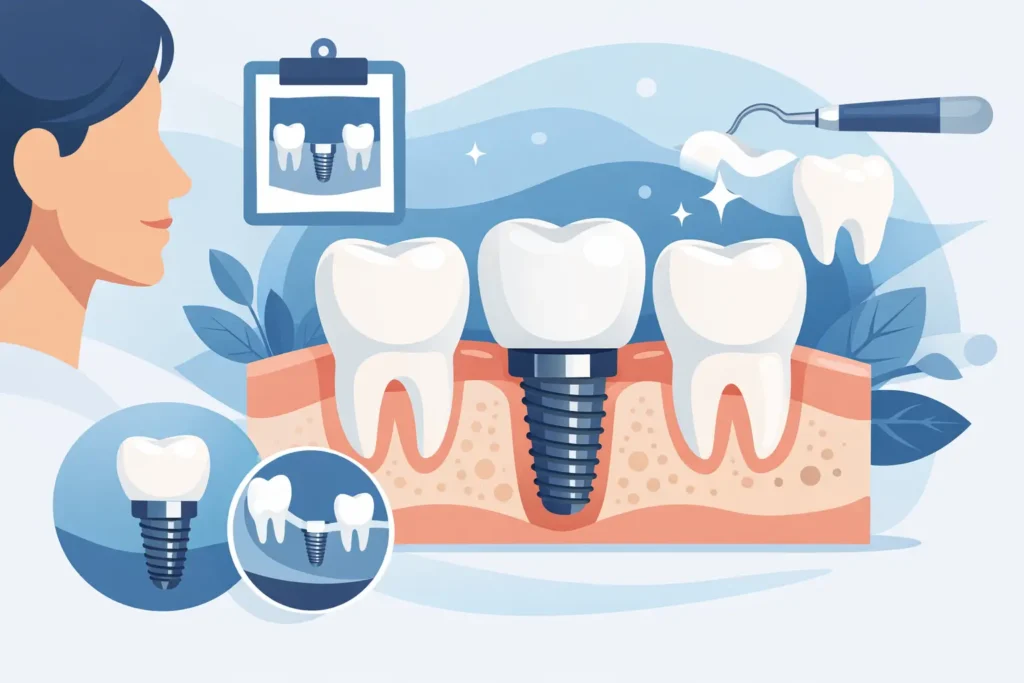
A dental implant is a small titanium post placed into the jawbone to act like an artificial tooth root. Once it heals and bonds with the bone, it supports a replacement tooth such as a crown, bridge, or even a full denture in some cases.
That root replacement is what makes implants different from other options. A traditional bridge relies on neighboring teeth for support. A denture rests on the gums. An implant is anchored in the jaw, which gives it stability and helps preserve the bone in that area.
This matters because when a tooth is missing for a long time, the jawbone underneath can begin to shrink. That bone loss may change the shape of the face over time and can make future treatment more complicated. Implants help stimulate the bone in a way that removable options cannot.
Why patients choose dental implants
Many patients are drawn to implants because they want something that feels secure. They do not want a replacement tooth that shifts, clicks, or needs to be removed at night. They want to eat more comfortably and smile without second-guessing themselves.
Implants can also be a practical choice for long-term oral health. Because they do not depend on adjacent teeth for support, those healthy teeth do not need to be reduced the way they often are for a bridge. When planned well and maintained properly, implants can be a durable solution.
That said, they are not automatically the best choice for every person. Treatment takes time, healing matters, and there are situations where another option may be more suitable. Good dentistry is not about pushing one treatment. It is about choosing the right one for the individual patient.
Who is a good candidate for dental implants?
A good implant candidate usually has healthy gums, enough jawbone to support the implant, and a commitment to keeping the area clean after treatment. Overall health matters too. Conditions like uncontrolled diabetes, heavy smoking, or certain medications can affect healing and implant success.
Age by itself is usually not the issue. Many adults, including older patients, can be suitable candidates if their oral and general health are stable. The more important questions are whether the bone is strong enough, whether the gums are healthy, and whether the patient is ready for a treatment process that may take several months.
If you have already lost bone, that does not always rule out implants. Some patients may still be eligible with additional procedures such as bone grafting. This is why a proper clinical examination and imaging are essential before making a decision.
What the treatment process usually looks like
Implant treatment is more than a single appointment. It is a planned process, and understanding the sequence helps patients feel more prepared.
Consultation and assessment
The first step is a detailed evaluation. Your dentist checks the condition of your teeth and gums, reviews your medical history, and uses X-rays or digital imaging to assess bone levels and implant position. This planning stage is where safety and precision begin.
If a tooth is badly damaged and cannot be saved, extraction may be needed before implant placement. In some cases, an implant can be placed soon after extraction. In others, the site needs time to heal first. It depends on infection, bone condition, and stability.
Implant placement
During the implant procedure, the titanium post is placed into the jawbone under local anesthesia. Many patients are surprised that it is more comfortable than they expected. Some soreness afterward is normal, but it is typically manageable with routine post-treatment care.
Healing and integration
After placement, the implant needs time to fuse with the bone. This process is called osseointegration. It is one of the most important parts of treatment because it creates the stable foundation for the final tooth.
Healing time varies. Some patients heal faster than others, and the location of the implant can affect the timeline. Rushing this step is rarely a good idea.
Final restoration
Once healing is complete, the dentist attaches the final replacement tooth. For a single missing tooth, this is often a custom crown designed to match the surrounding teeth. The goal is not just to fill the space, but to restore a natural bite and appearance.
Does getting an implant hurt?
This is one of the most common questions, and it is understandable. Most patients do not describe implant placement as painful during the procedure because the area is numbed well. What they usually notice afterward is mild to moderate soreness, swelling, or tenderness for a few days.
The experience can vary depending on whether the case is straightforward or more complex. A single implant in a healthy site is very different from treatment that includes extraction, grafting, or multiple implants. Even so, with good planning and clear aftercare instructions, the process is often more manageable than patients fear.
How long do dental implants last?
Implants are designed to be long-lasting, but they are not maintenance-free. The implant itself can last many years, often much longer than people expect, especially when it is placed correctly and cared for well. The crown on top may need replacement at some point due to wear, just like other dental restorations.
The biggest factors in longevity are oral hygiene, regular dental visits, bite forces, gum health, and smoking habits. Patients sometimes think of implants as artificial teeth that cannot get into trouble, but the surrounding gums and bone still need consistent care. An implant can fail if infection develops around it or if it is overloaded over time.
Dental implants vs other tooth replacement options
If you are comparing implants with bridges or dentures, the decision usually comes down to priorities.
A bridge may be faster and may avoid surgery, but it often requires support from neighboring teeth. A removable denture can replace several teeth at a lower initial cost, but some patients struggle with movement, pressure spots, or reduced chewing efficiency. Implants generally offer more stability and bone support, but they involve surgery, a longer timeline, and a higher upfront investment.
That trade-off is important. Some patients want the most fixed and natural-feeling option possible. Others want a shorter treatment path. There is no single answer that fits everyone.
How to care for implants after treatment
Caring for an implant is similar to caring for natural teeth in one important way: daily cleaning is non-negotiable. Brushing, cleaning between teeth, and attending regular dental checkups all matter. The area around the implant must stay healthy, not just the crown you can see.
Patients who do best with implants tend to treat them as part of their long-term health, not as a one-time procedure. If you clench or grind your teeth, your dentist may also recommend a night guard to protect the implant and the rest of your smile.
When to ask a dentist about implants
You do not need to wait until you have lost several teeth to ask about treatment. In fact, it is often better to explore your options early, while more bone and surrounding support remain. If you have a missing tooth, a failing tooth, or a denture that no longer feels secure, it is reasonable to ask whether an implant could help.
In a family-focused clinic setting, those conversations should feel calm and clear, not rushed. A good dentist will explain whether you are a suitable candidate, what the process would involve, and whether a different treatment might serve you better.
Replacing a missing tooth is not only about filling a gap. It is about protecting comfort, function, and confidence for the years ahead. If dental implants are on your mind, the best next step is a proper evaluation so you can make a decision with clarity, not guesswork.

Pingback: Comprehensive Dental Exam Guide for Patients - Klinik Pergigian Kulim
Pingback: Extraction Versus Root Canal Cost: What to Know - Klinik Pergigian Kulim