
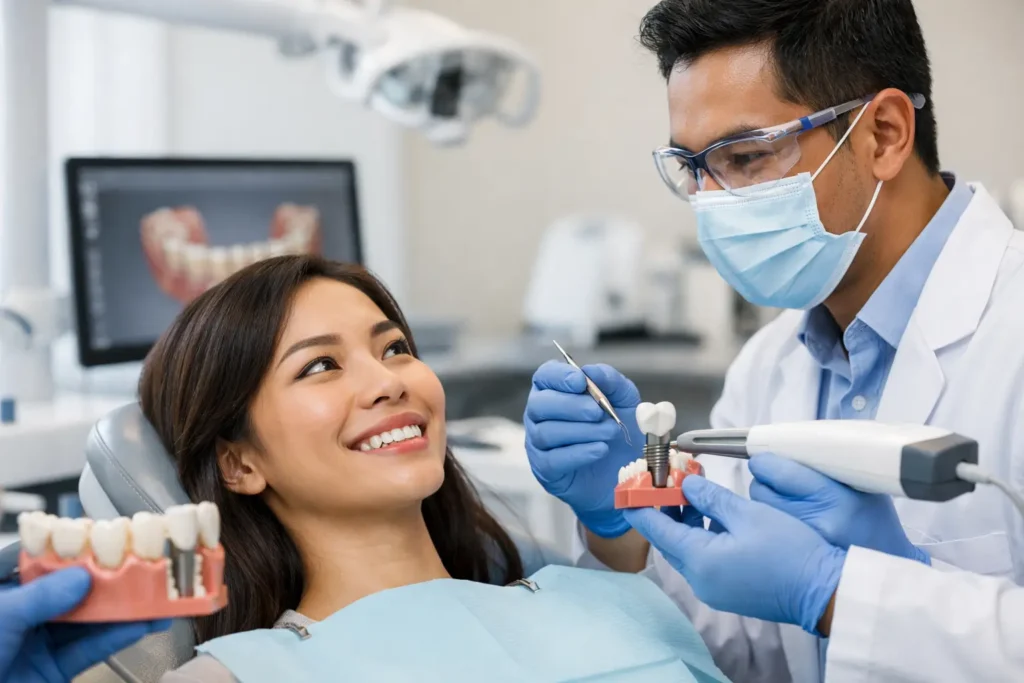
A missing tooth changes more than your smile. It can make chewing harder, affect the way you speak, and slowly shift the balance of your bite. If you are wondering how to replace missing teeth, the right answer depends on where the tooth was lost, how many teeth are missing, your gum and bone health, and what kind of long-term result you want.
Some patients want the quickest way to fill a gap. Others want the most natural feel possible. Both are valid goals, but the best treatment is not always the same for every person. A careful dental exam helps match the solution to your needs, not just the space in your smile.
How to replace missing teeth based on your situation
When dentists plan tooth replacement, they look at function first. Can you chew comfortably? Are nearby teeth drifting? Is the missing tooth visible when you smile? They also check the condition of the surrounding teeth and gums, because that often shapes what is possible.
If one tooth is missing, a dental implant or bridge is often considered. If several teeth are missing, a partial denture, bridge, or multiple implants may work. If all teeth in an arch are gone, full dentures or implant-supported options usually come into the discussion.
Age alone does not decide the treatment. Oral health, bone support, medical history, budget, and personal preference matter more. That is why one patient may do very well with a removable denture, while another is a better fit for implants.
Dental implants
A dental implant replaces the root of a missing tooth with a small titanium post placed in the jawbone. After healing, a crown is attached on top so the replacement looks and functions like a natural tooth.
For many adults, implants are the closest thing to getting a tooth back. They do not rely on neighboring teeth for support, and they can help maintain bone in the area. That matters because when a tooth is lost, the jawbone underneath no longer gets the same stimulation from chewing. Over time, that bone can shrink.
The biggest advantage of implants is stability. They feel secure, they are easy to clean like natural teeth, and they can be a strong long-term option. Patients often like that an implant stands on its own rather than placing extra stress on adjacent teeth.
Still, implants are not automatically the right choice for everyone. They usually cost more upfront, treatment takes longer, and healthy gums and adequate bone are important. Some patients may need bone grafting first, which adds time and expense. Healing can also vary depending on smoking, diabetes control, and overall health.
When implants make the most sense
Implants are often a strong option when you are missing one tooth, want a fixed solution, and have good bone support. They can also work well for several missing teeth or to stabilize loose dentures. If comfort, chewing strength, and long-term durability are top priorities, implants are worth discussing.
Dental bridges
A dental bridge fills the gap by attaching an artificial tooth to the natural teeth on either side. Those supporting teeth are usually prepared and covered with crowns, and the replacement tooth sits between them.
A bridge can be a very practical solution when one or more teeth are missing in a row. Compared with implants, treatment is often faster, and surgery is not usually required. For patients who want a fixed replacement but are not ready for implant treatment, a bridge can be a reliable middle ground.
The trade-off is that the neighboring teeth must often be reshaped to support the bridge, even if they were otherwise healthy. Bridges also do not replace the tooth root in the bone, so they do not offer the same bone-preserving effect as implants.
With good care, many bridges last well for years. Daily cleaning matters, especially under the false tooth where food and plaque can collect. A bridge may be recommended when the supporting teeth already need crowns, because the treatment can restore several problems at once.
Partial and full dentures
Dentures are removable appliances used to replace multiple missing teeth. A partial denture fills spaces when some natural teeth remain. A full denture replaces all teeth in the upper or lower arch.
For many patients, dentures are the most accessible way to restore appearance and chewing after tooth loss. They can be made relatively quickly, and they do not require the same surgical planning as implants. If several teeth are missing across different areas of the mouth, a partial denture can be an efficient solution.
Modern dentures can look natural, but they do take adjustment. Some people need time to get used to speaking and eating with them. Lower dentures, in particular, can feel less stable than upper dentures because they have less surface area for support.
Dentures also need maintenance. Over time, the shape of the gums and bone can change, which may make a denture feel loose. Relining, adjustment, or replacement may be needed. This does not mean dentures are a poor choice. It simply means they require realistic expectations and regular follow-up.
Implant-supported dentures
For patients who want more security than a traditional denture can provide, implant-supported dentures can make a major difference. A few implants are placed in the jaw, and the denture attaches to them for better retention.
This option can improve comfort, reduce slipping, and make chewing easier. It is especially helpful for lower dentures that tend to move. It costs more than a regular denture, but many patients find the added stability worth it.
What to consider before choosing
If you are comparing options for how to replace missing teeth, cost matters, but it should not be the only factor. A lower-cost solution today may need more maintenance or replacement later. A higher upfront investment may last longer and feel better day to day. The best value comes from looking at the full picture.
You should also think about how important fixed teeth are to you. Some patients are completely comfortable with a removable denture. Others know they want something that stays in place and feels closer to natural teeth. Neither preference is wrong.
Bone and gum health are another key part of the decision. If the area has been missing a tooth for a long time, the bone may have changed. That does not always rule out treatment, but it can affect which options are simpler or more predictable.
Finally, consider your habits. Good oral hygiene and regular checkups help every replacement option last longer. Smoking, grinding, and untreated gum disease can shorten the life of restorations and increase complications.
What happens if you wait too long?
Some people postpone treatment because the gap is not visible, or because the missing tooth is not painful. The problem is that tooth loss often creates gradual changes that are easy to miss at first.
Nearby teeth may tilt into the space. Opposing teeth can drift or over-erupt. Chewing may shift to one side, which can strain the bite. Bone loss can continue under the missing tooth area, sometimes making future treatment more complicated.
That does not mean every missing tooth must be replaced immediately, but waiting should be a planned decision, not an accidental one. A dental consultation can help you understand what is likely to happen in your specific case.
Which option feels most natural?
In terms of feel and function, a single implant with a crown is often the closest to a natural tooth. It is fixed, stable, and does not need to come out for cleaning. For multiple teeth, implant-supported solutions can also provide a very natural chewing experience.
That said, natural feel is only one part of success. A well-made bridge may serve a patient beautifully for years. A carefully fitted denture can restore confidence and eating ability for someone who has been struggling for a long time. The right result is the one that fits your mouth, your health, and your daily life.
At a family-focused clinic such as Ideal Smile, this conversation usually starts with a simple goal: helping you restore comfort, function, and confidence in a way that feels realistic and dependable.
If you are missing a tooth, the next best step is not guessing which treatment sounds best online. It is getting a professional evaluation, asking honest questions, and choosing the option you will feel comfortable living with for years to come.
