
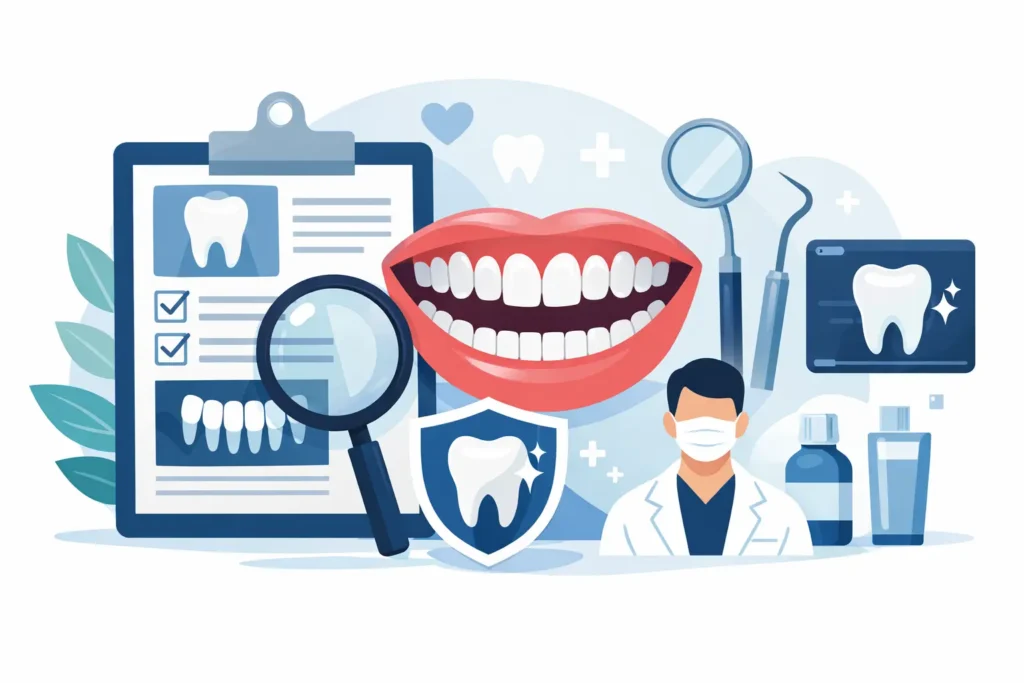
A quick look in the mouth is not the same as a real dental assessment. If you have ever wondered what should an assessment for oral health include, the short answer is this: it should go beyond checking for cavities. A proper assessment looks at your teeth, gums, bite, soft tissues, habits, symptoms, and long-term risk so treatment is based on what you actually need, not just what is obvious that day.
For patients, that matters more than it may seem. Many dental problems start quietly. Gum disease can develop with little pain. Small cavities can stay hidden between teeth. Clenching, grinding, or bite issues may cause headaches, sensitivity, or cracked teeth before you realize the source. A complete oral health assessment helps catch those problems early, when treatment is usually simpler, more comfortable, and less costly.
What should an assessment for oral health include?
A thorough assessment usually begins with a conversation, not an instrument. Your dentist should ask about pain, sensitivity, bleeding gums, bad breath, jaw discomfort, loose teeth, dry mouth, and changes you have noticed. Medical history also matters. Conditions like diabetes, acid reflux, and certain medications can affect the mouth in very real ways.
This part is easy to overlook, but it shapes everything that follows. For example, a patient with frequent snacking, high sugar intake, or dry mouth may be at higher risk for decay even if the teeth look fairly good today. Someone who has not had dental care in years may need a more detailed baseline. A child, an adult with braces, and a patient considering implants will not all need the exact same focus.
Teeth and existing dental work
The dentist should examine each tooth for signs of decay, cracks, wear, enamel damage, staining, and old restorations that may be failing. Fillings, crowns, bridges, dentures, and implants all need to be checked for fit, function, and condition.
This is where detail matters. A filling can look intact but leak around the edges. A cracked tooth may only show subtle signs until you bite in a certain way. Tooth wear may point to grinding, acid erosion, or a bite imbalance. A proper assessment does not just record what treatment has been done before. It checks how well that treatment is holding up now.
Gums and supporting bone
Healthy teeth depend on healthy gums and bone. That is why any meaningful oral health assessment should include a periodontal evaluation. Your dentist may look for redness, swelling, bleeding, gum recession, tartar buildup, and pockets around the teeth.
Gum disease is common, and early stages are often painless. Patients sometimes assume bleeding during brushing is normal, but it is usually a sign that the gums need attention. If periodontal problems are found early, treatment is more manageable. If ignored, the result can be bone loss, loose teeth, and more complex care later.
Soft tissues inside the mouth
An oral health assessment should not stop at teeth and gums. The tongue, cheeks, lips, roof of the mouth, floor of the mouth, and throat area should also be examined. This helps identify ulcers, infections, friction spots, fungal issues, suspicious lesions, and other abnormalities.
Most soft tissue changes turn out to be harmless, such as irritation from biting the cheek or rubbing from a denture. Still, changes that do not heal or areas that look unusual should never be dismissed. This part of the exam is one of the reasons regular checkups are so valuable, especially if you smoke, vape, or have ongoing irritation in the mouth.
What should an assessment for oral health include besides a visual exam?
A visual exam is essential, but it does not tell the whole story. Teeth touch each other, bone sits below the gumline, and some issues only show up when additional tools are used. Depending on your situation, digital X-rays may be recommended to detect decay between teeth, infection at the root, bone loss, impacted teeth, or hidden problems under old dental work.
Not every patient needs the same type or frequency of imaging. That depends on age, symptoms, dental history, and current risk. A patient with active decay, pain, or wisdom tooth concerns may need more detailed imaging than someone with a stable mouth and regular maintenance visits. The key is using X-rays thoughtfully, not routinely without reason and not avoiding them when they would clearly improve diagnosis.
Bite, jaw, and function
Your dentist should also look at how your teeth come together and how your jaw functions. Bite problems can lead to uneven wear, chipped teeth, jaw soreness, and muscle tension. Some patients come in for what feels like tooth pain and find out the real issue is clenching or grinding.
This part of the assessment may include checking jaw movement, listening for clicking, noting signs of tooth wear, and asking about headaches or morning jaw tightness. It is one of those areas where symptoms and exam findings need to be connected carefully. Not every click means a serious problem, and not every worn tooth means urgent treatment, but the pattern should be assessed in context.
Oral hygiene and home care habits
A good assessment should include an honest look at how well plaque is being controlled at home. That is not about blame. It is about understanding whether brushing technique, flossing habits, diet, and product choices are supporting your oral health or working against it.
Some patients brush regularly but still miss the gumline. Others floss only when food gets stuck. Children may need help even when they seem independent. Adults with crowns, bridges, or braces often need different cleaning tools. The best dental advice is specific, because generic reminders rarely change results.
Risk factors and future concerns
The strongest dental assessments do more than identify current problems. They also evaluate your future risk. Are you likely to develop more cavities? Is gum disease stable or getting worse? Are wisdom teeth likely to cause crowding, decay, or infection? Is a cracked tooth at risk of breaking further?
This is where clinical experience becomes especially valuable. Two patients can have similar mouths today but very different outlooks. One may only need routine preventive care. Another may need closer monitoring and early intervention to avoid a bigger problem. Dentistry is not just about fixing damage. It is about understanding where things are heading.
What a personalized care plan should include
Once the assessment is complete, you should leave with more than a diagnosis. You should have a clear explanation of findings, treatment priorities, and next steps. If something is urgent, that should be explained plainly. If something can be monitored, that should be explained too.
A personalized care plan may include cleaning and scaling, fillings, gum treatment, a root canal, extraction, a crown, orthodontic evaluation, or advice on whitening and cosmetic improvements. In many cases, care happens in stages. Pain or infection comes first. Stabilizing decay or gum inflammation may come next. Cosmetic work often makes the most sense after health issues are under control.
That order matters. Patients sometimes want the final result right away, which is understandable, but strong long-term outcomes usually come from addressing the foundation first. Healthy gums, stable teeth, and a balanced bite support everything else.
Why the assessment should feel collaborative
A dental assessment should be professional, but it should also feel reassuring. Patients do best when they understand what is happening and why a certain treatment is being recommended. If you feel rushed, confused, or pressured, that is not ideal care.
A better experience is one where your concerns are heard, the findings are shown or explained clearly, and the treatment plan makes sense for your health, budget, and timeline. Sometimes there is more than one reasonable option. A caring dentist will explain the trade-offs so you can make an informed decision.
At a family-focused clinic like Ideal Smile, this matters across every age group. A parent bringing in a child needs guidance that feels calm and practical. An adult with a damaged tooth needs confidence in the next step. A patient thinking about braces, implants, or whitening needs honesty about what is possible and what should come first.
A complete oral health assessment is not about finding faults. It is about getting a true picture of your mouth so your care can be accurate, preventive, and personal. When the assessment is done well, you leave knowing where you stand and what will help protect your smile over time.

Pingback: Preventive Care Dental Cleaning Explained - Klinik Pergigian Kulim