
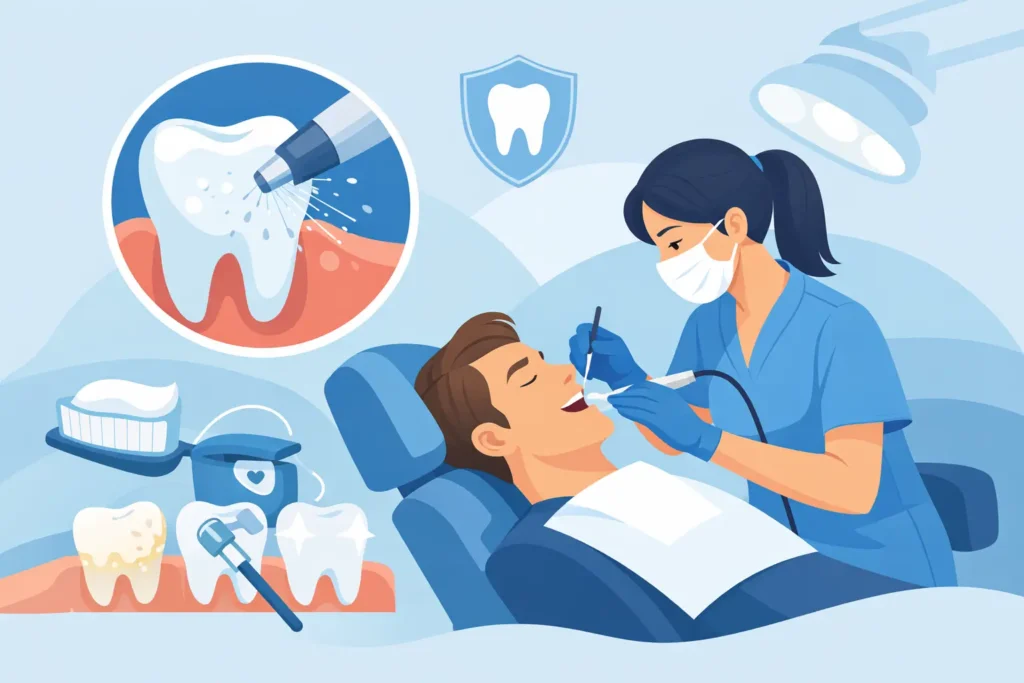
Most dental problems do not start with pain. They start quietly – a little plaque at the gumline, early inflammation, a small area of enamel weakening. That is why preventive care dental cleaning matters so much. It is not just about making teeth look cleaner after a visit. It is about finding small problems early, lowering the risk of bigger treatment later, and helping every member of the family keep a healthier smile for the long term.
For many patients, a cleaning appointment can feel easy to postpone because nothing hurts yet. But prevention works best before symptoms show up. A routine visit gives your dental team the chance to remove buildup you cannot fully clean at home, check for signs of decay or gum disease, and guide you on what your teeth and gums need next.
What preventive care dental cleaning actually includes
A preventive cleaning is more than a quick polish. In most cases, it starts with an examination of your mouth, teeth, and gums. Your dentist or hygienist looks for plaque, tartar, bleeding, gum recession, weak spots in enamel, and signs that something is changing below the surface.
The cleaning itself usually involves removing plaque and hardened tartar from around the teeth and along the gumline. That buildup is difficult to remove with brushing alone once it hardens. After that, the teeth are polished to help smooth the surfaces and remove surface stains. Depending on your needs, the visit may also include flossing, fluoride, digital X-rays, or advice on brushing technique and home care.
This is where prevention becomes practical. A regular cleaning helps reduce bacteria and inflammation now, but it also creates a record over time. If your dentist notices that one area keeps collecting plaque or that your gums bleed in the same place at each visit, those patterns can be addressed before they become more serious.
Why regular cleanings matter even if your teeth feel fine
One of the biggest misunderstandings in dental care is assuming no pain means no problem. Cavities in the early stage often do not hurt. Gum disease can begin with mild redness or bleeding that many people ignore. Even teeth that look healthy in the mirror can hide trouble between teeth or under the gums.
Preventive cleanings help catch these issues when treatment is simpler, more comfortable, and often less costly. A small cavity found early may only need a straightforward filling. If the same tooth is left untreated for too long, that problem can progress to infection, root canal treatment, or extraction.
The same is true for gum health. Mild gingivitis can often improve with a professional cleaning and better home care. Once gum disease advances, treatment becomes more involved and the long-term effects can include gum recession, bone loss, and loose teeth. Prevention does not guarantee that you will never need restorative treatment, but it strongly improves the odds of avoiding larger problems.
How often should you schedule preventive care dental cleaning?
For many people, every six months is a reasonable starting point. That schedule works well for patients with generally healthy teeth and gums who brush and floss consistently. But six months is not a rule for every person.
Some patients benefit from more frequent visits. If you have a history of gum disease, heavy tartar buildup, frequent cavities, dry mouth, diabetes, or orthodontic appliances, your dentist may recommend cleaning every three to four months. Children and teens may also need closer monitoring during stages when oral hygiene habits are still developing.
On the other hand, some adults with very stable oral health may not need the same level of frequency as someone with ongoing risk factors. This is one of those areas where it depends. The right schedule should match your actual oral health, not a one-size-fits-all routine.
What to expect during the appointment
If you have been putting off a visit because you are unsure what will happen, it helps to know that preventive appointments are usually straightforward. Your dental team will first review your concerns, check your teeth and gums, and decide whether routine cleaning is appropriate or whether you need a deeper level of care.
During the cleaning, you may feel light pressure or scraping as plaque and tartar are removed. If your gums are inflamed, some areas may feel more sensitive. That does not always mean something is seriously wrong, but it can be a sign that bacteria have been irritating the gums for some time.
After the cleaning, your mouth typically feels smoother and fresher. If X-rays are needed, they can help detect problems that are not visible during the exam, such as decay between teeth or changes around the roots and bone. A good visit should also give you clarity – not just cleaner teeth, but a better understanding of where your oral health stands.
Routine cleaning vs deep cleaning
Patients often hear the word cleaning and assume all cleanings are the same. They are not. A routine preventive cleaning is designed for patients whose gums are generally healthy or have only mild inflammation. It focuses on removing buildup above the gumline and around accessible areas.
A deep cleaning, often called scaling and root planing, is different. It is recommended when gum disease has progressed and bacteria, tartar, and inflammation extend below the gumline. This type of treatment is more involved because it aims to clean the root surfaces and help the gums heal.
That difference matters because some patients delay visits hoping for a simple cleaning, only to find they now need more advanced treatment. The earlier gum problems are found, the more likely it is that routine preventive care will be enough.
Preventive care for children, adults, and older family members
Preventive dental care is not only for one age group. Children need regular cleanings because they are still learning brushing habits, may miss spots easily, and can develop cavities quickly. These visits also help them become comfortable in the dental setting, which can reduce anxiety over time.
Adults often balance work, family responsibilities, and stress, which makes dental care easy to push down the list. Yet this is the stage when grinding, gum issues, and neglected cavities often begin to show up. A preventive visit can catch wear, inflammation, or decay before they interrupt daily life.
Older adults may deal with dry mouth, exposed roots, existing restorations, or changes related to general health conditions. That can increase the risk of decay and gum disease, even for people who have taken good care of their teeth for years. Regular cleanings remain valuable because oral health needs change with age.
What home care can and cannot do
Brushing twice a day and cleaning between the teeth are essential. Without daily home care, professional cleanings alone will not protect your smile. At the same time, home care has limits. Even excellent brushing cannot reliably remove tartar once it has hardened onto the teeth.
That is why prevention works best as a partnership. Daily habits reduce bacterial buildup between visits, while professional cleanings remove what home care misses and catch early warning signs. If your dentist recommends a specific toothpaste, flossing tool, or mouth rinse, it is usually because your mouth shows a pattern that needs targeted support.
You also do not need a perfect routine to benefit from care. Some patients avoid appointments because they feel embarrassed about the condition of their teeth. In reality, a caring dental team wants to help, not judge. Starting now is always better than waiting until things get worse.
When not to wait for your next cleaning
Preventive visits are planned care, but some symptoms should be checked sooner. If you notice persistent tooth pain, swelling, bleeding that does not improve, a bad taste in the mouth, sensitivity that is getting worse, or a broken tooth, it is wise to schedule an exam instead of waiting for your next routine cleaning.
Prevention and treatment go together. A modern family dental clinic should be able to help with both – from routine cleanings and checkups to fillings, gum care, and more advanced treatment when needed. That continuity matters because it means your care is based on an ongoing understanding of your dental history, not just a single visit.
At Ideal Smile, that prevention-first approach is part of helping patients protect their comfort, health, and confidence over time. The goal is not simply to clean teeth for the day. It is to support a smile that stays healthier year after year.
A preventive cleaning may seem like a small appointment, but small appointments often prevent big problems. If it has been a while since your last visit, taking that first step now can make future dental care much easier.

Pingback: How to Prepare for Dental Checkup Visits - Klinik Pergigian Kulim