
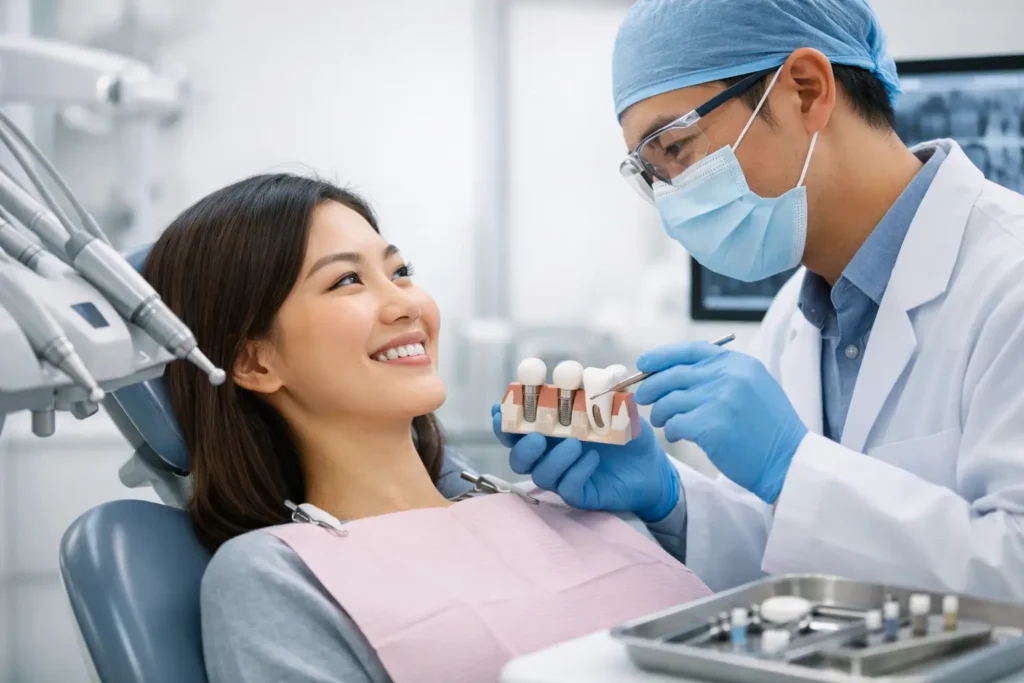
A dental implant is not simply a replacement tooth you choose from a shelf. It is a carefully planned treatment that affects how you chew, speak, smile, and care for your oral health for years to come. Knowing how to choose dental implants means looking beyond the visible crown and asking whether the entire treatment plan is right for your mouth, health, lifestyle, and long-term goals.
For many patients, an implant can be the closest option to having a natural tooth again. But the best result comes from sound diagnosis, precise planning, quality materials, and consistent aftercare – not from choosing based on price alone.
Start With a Complete Dental Assessment
Before discussing implant brands or crown colors, your dentist needs to understand why the tooth was lost and what condition your mouth is in now. A missing tooth caused by trauma may need a different approach than one lost due to gum disease, decay, or a failed root canal treatment.
A proper assessment typically includes an examination of your teeth and gums, digital X-rays, and often 3D imaging when more detail is needed. These images help the dentist assess the amount and shape of bone available, the location of nerves and sinuses, and the spacing between neighboring teeth. This is especially important for implants in the back of the mouth, where bone levels and anatomical structures can affect placement.
Your gums must also be healthy enough to support treatment. If active gum disease is present, it should be treated and controlled first. Placing an implant into an unhealthy environment may increase the risk of infection and bone loss around the implant later.
Understand What You Are Choosing
When people say “dental implant,” they often mean the new tooth they can see. In reality, an implant restoration usually has three parts: the implant fixture placed in the jawbone, an abutment that connects the fixture to the visible tooth, and the crown or bridge that restores your smile.
The fixture is commonly made from titanium, a biocompatible material with a long clinical history. Zirconia implants are another option in selected cases, particularly for patients who prefer a metal-free solution. Neither material is automatically best for everyone. The ideal choice depends on the location of the missing tooth, your bite, gum thickness, medical history, and the dentist’s treatment plan.
The crown also matters. It should be designed to match your natural teeth in shape and shade while fitting your bite correctly. A crown that looks attractive but is too high or poorly shaped can place excess pressure on the implant and make cleaning difficult. A good implant restoration should feel comfortable and look like it belongs in your smile.
How to Choose Dental Implants Based on Your Needs
The right implant option depends on how many teeth you are replacing and where they are located. A single missing tooth may be restored with one implant and one crown. Several missing teeth may be replaced with an implant-supported bridge, which can avoid placing an implant for every lost tooth. If most or all teeth are missing, implant-supported dentures can offer much greater stability than conventional removable dentures.
Your daily needs should guide the conversation. Someone replacing a front tooth may place extra importance on gum appearance and color matching. A patient replacing a molar may be more focused on chewing strength and easy cleaning. For denture wearers, the main goal may be preventing the denture from moving while eating or speaking.
There are trade-offs. Fixed implant bridges feel more similar to natural teeth but require careful cleaning underneath. Implant-supported removable dentures are often easier to clean and may be more affordable, but they still need to be removed for daily care. Your dentist should explain the practical routine involved before you decide.
Look for Careful Planning, Not a Rushed Procedure
Implant treatment is a process, not a one-visit purchase. In some cases, an implant can be placed soon after a tooth is extracted. In others, the area needs time to heal first. If bone has shrunk after a tooth has been missing for some time, bone grafting may be recommended to create a stronger foundation.
This does not mean every patient needs grafting or a lengthy treatment timeline. It means the plan should be based on your individual bone and gum condition. A dentist who explains why immediate placement is suitable, or why waiting may be safer, is helping you make a better-informed decision.
Ask how the position of the implant will be planned. Modern imaging and guided planning can improve precision, particularly in more complex cases. Technology is valuable, but it should support clinical judgment rather than replace it. The goal is accurate placement that protects nearby structures and allows the final crown to function naturally.
Consider the Dentist’s Experience and Follow-Up Care
An implant is only as dependable as the planning, placement, restoration, and maintenance behind it. Choose a dental team that takes time to assess your full oral health, explain the alternatives, and show you what each stage involves.
You should feel comfortable asking who will place the implant, who will design the final crown, and how your bite will be checked. It is also reasonable to ask what happens if you need treatment such as a bone graft, temporary tooth replacement, or gum care before the implant can be placed.
At a full-service clinic, your treatment can be coordinated alongside other dental needs, such as treating decay in nearby teeth, managing gum disease, replacing old crowns, or improving bite issues. For patients in Kulim, this coordinated approach can make implant care less stressful because the focus stays on the health of your whole smile, not only the space left by one missing tooth.
Compare Costs With the Full Treatment Plan in Mind
Dental implant fees can vary because every case is different. A quote may include the implant fixture, abutment, crown, imaging, extraction, temporary restoration, surgery, and follow-up visits, or some of these may be charged separately. The lowest advertised figure may not represent the full cost of completing treatment.
Ask for a clear written explanation of what is included. If additional procedures might be needed, such as grafting or gum treatment, ask when that can be confirmed and how it would affect the overall estimate. This is not about choosing the most expensive option. It is about understanding the value of a treatment that is planned safely and designed to last.
Also consider the cost of delaying care. When a tooth is missing, nearby teeth can shift, the opposing tooth may over-erupt, and jawbone can gradually reduce in volume. An implant is not urgent in every situation, but a timely evaluation gives you more options.
Check Whether You Are Ready for Implant Treatment
Many adults can be good candidates for dental implants, including people with well-managed health conditions. However, candidacy is personal. Smoking, uncontrolled diabetes, active gum disease, teeth grinding, certain medications, and a history of radiation therapy in the jaw area may affect healing or long-term success.
Be open with your dentist about your medical history and habits. This information helps them plan safely. If you grind your teeth at night, a protective night guard may be recommended after the final crown is fitted. If you smoke, reducing or stopping before treatment can support healing and improve the outlook for your implant.
Good home care is essential. Implants cannot get cavities, but the gums and bone around them can become inflamed if plaque is allowed to build up. Brushing thoroughly, cleaning between teeth as advised, and attending regular checkups help protect your investment.
Ask the Questions That Give You Clarity
A trustworthy consultation should leave you feeling informed, not pressured. Ask what alternatives are available, including a bridge or removable denture, and why an implant is being recommended in your case. Ask about the expected treatment timeline, healing period, temporary tooth options, possible risks, and the maintenance your final restoration will need.
You can also ask to see the proposed position of the implant and how the final tooth will be designed. Clear answers are a sign that your dentist is focused on helping you make a confident, realistic decision.
The right dental implant should gradually become an unremarkable part of your day: secure when you eat, comfortable when you speak, and natural when you smile. Give yourself the time to choose a plan built around that outcome.
