
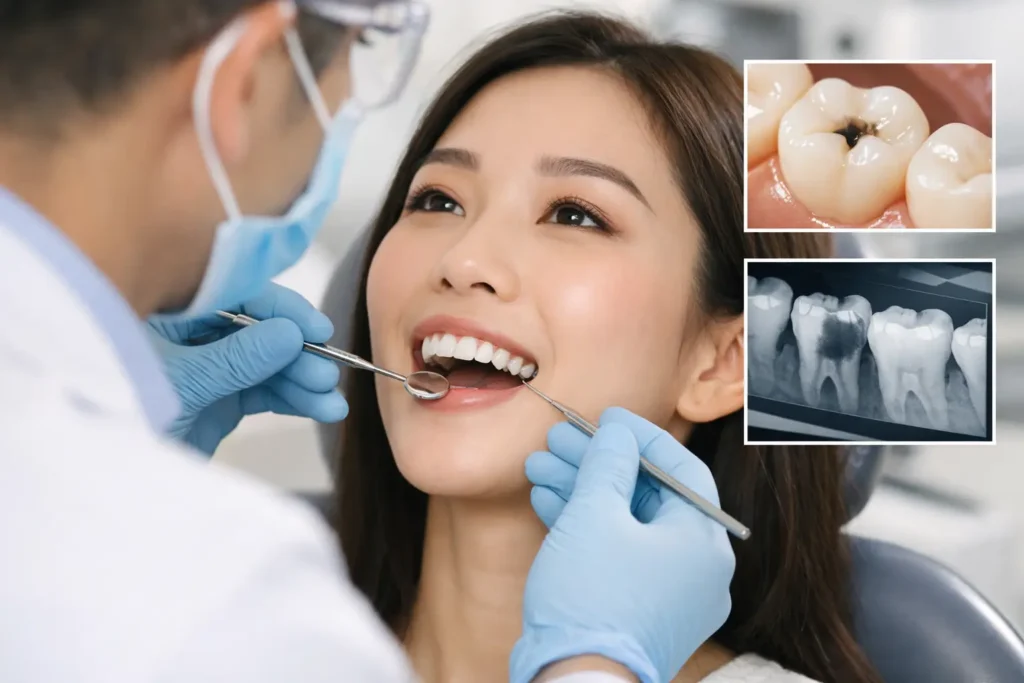
A cavity does not always announce itself with a toothache. It may begin as a faint sensitivity when you sip something cold, a spot that catches food more often than usual, or a rough area your tongue keeps finding. Knowing how to know cavity symptoms early can give you more treatment options and help protect more of your natural tooth.
Cavities are areas of tooth decay caused when bacteria in plaque use sugars from food and drinks to produce acids. Over time, those acids weaken the hard outer enamel and can create a small hole. Early decay can often be managed more conservatively than a deep cavity, which is why changes that seem minor are worth checking.
How to Know Cavity Symptoms at Different Stages
Cavity symptoms vary based on where the decay is located and how far it has progressed. A cavity between two teeth, for example, may not be visible in the mirror. A cavity on a chewing surface may begin as a dark groove or a place where food repeatedly gets stuck.
Early cavities may have no pain
Early enamel decay often causes no discomfort at all. You might notice a white, chalky-looking area on a tooth, particularly near the gumline, or a darker brown spot in a groove. These changes do not confirm a cavity on their own, since staining can look similar, but they are a good reason to schedule a dental checkup.
At this stage, a dentist may use an examination and digital X-rays to see whether decay is present and whether it has reached beyond the enamel. X-rays are particularly helpful for spotting decay hidden between teeth, where brushing alone cannot give you a clear view.
Sensitivity can be an early warning
Brief sensitivity to cold drinks, sweet foods, or hot beverages can be one of the first noticeable signs. You may feel a quick zing that disappears when the trigger is gone. Sensitivity does not automatically mean you have a cavity. It can also come from gum recession, worn enamel, a cracked tooth, or recent dental treatment.
Still, sensitivity that is new, keeps returning, or affects the same tooth should not be ignored. The pattern matters. If ice cream consistently causes discomfort in one area, or sweets trigger pain in a single back tooth, it is wise to have that tooth assessed.
A visible hole, rough edge, or food trap needs attention
As decay progresses, you may notice a small pit, hole, or rough area with your tongue. Food may become lodged in the same place after meals, and floss may shred or catch between two teeth. A dark spot can be present, but color alone is not a reliable measure of how serious decay is. Some dark grooves are harmless stains, while decay can sometimes remain light in color.
Do not try to scrape or probe the area at home. A sharp object can injure your gums or damage a weakened tooth. Gentle brushing, daily flossing, and a professional evaluation are safer next steps.
Pain may signal deeper decay
When decay reaches the softer inner layer of the tooth, called dentin, sensitivity can become more noticeable. Pain may last longer after cold or sweet foods. Chewing on that side may feel uncomfortable, especially when you bite down on something firm.
A severe, throbbing, or spontaneous toothache can mean the decay is close to or has reached the pulp, the living tissue inside the tooth. At that point, treatment may be more involved. Depending on the condition of the tooth, a filling may no longer be enough, and root canal treatment or another restorative option may be recommended.
Symptoms That Are Often Mistaken for a Cavity
Not every tooth sensation is decay, and a careful examination is the only way to know the cause. A cracked tooth may hurt when you release your bite. Gum disease can cause tenderness, bleeding, or bad breath. Teeth grinding can lead to jaw soreness and generalized sensitivity. Sinus pressure can even make upper back teeth feel achy.
Old fillings can also leak or wear down around the edges, allowing new decay to develop underneath. This is one reason routine dental visits remain valuable even when a tooth looks normal and feels fine.
Bad breath or an unpleasant taste can occur with decay, but they are not specific symptoms. Dry mouth, gum problems, certain foods, and medical conditions can contribute too. If the taste is persistent, especially with pain or swelling, arrange a dental visit promptly.
When a Cavity Becomes Urgent
A cavity itself is not always an emergency, but infection can become urgent. Contact a dental office as soon as possible if you have facial swelling, swelling in the gums, fever, a pimple-like bump near a tooth, severe pain that disrupts sleep, or difficulty opening your mouth.
Seek urgent medical care if swelling affects your eye area, jaw, neck, breathing, or swallowing. Dental infections should not be left to settle on their own. Pain medicine may temporarily reduce discomfort, but it does not remove the source of infection.
For a lost filling or broken tooth, keep the area clean, avoid chewing on that side, and book an appointment. A temporary repair may be possible, but waiting can allow the tooth to fracture further or decay to progress.
What to Do If You Think You Have a Cavity
The best next step is a dental examination rather than waiting for pain to become stronger. During your visit, the dentist can inspect the tooth, check nearby teeth and gums, and use X-rays when needed. You should expect a clear explanation of what is found, whether treatment is necessary now, and what options are appropriate for your situation.
Treatment depends on the size and location of the cavity. Small areas of early decay may be monitored or supported with preventive measures if the enamel has not formed a hole. Once a cavity has created a defect in the tooth, a filling is commonly used to restore its shape and function. Larger cavities may need a crown, while infection inside the tooth may require root canal treatment before the tooth is restored.
In the meantime, brush twice daily with fluoride toothpaste, clean between your teeth every day, and reduce frequent sipping or snacking on sugary drinks and foods. The frequency of sugar exposure matters as much as the amount. Having sweet drinks slowly over several hours gives oral bacteria repeated opportunities to produce acid.
Avoid placing aspirin directly on a sore gum or tooth. It does not treat the cavity and can burn the soft tissues. If you use over-the-counter pain relief, follow the label instructions and check with a medical professional if you have health conditions, take other medications, or are unsure what is suitable for you.
Preventing the Next Cavity
Cavity prevention is not about having a perfect routine. It is about consistently reducing the conditions that let decay progress. Fluoride strengthens enamel, good daily cleaning removes plaque, and regular checkups help identify problems where you cannot see them.
Children benefit from the same early attention. A child may not be able to explain sensitivity clearly, so parents should watch for avoiding one side when chewing, reluctance to brush a certain tooth, visible spots, or complaints about cold foods. Bringing children in before they are in pain can make dental visits feel calmer and more familiar.
If you are concerned about a new spot, sensitivity, or toothache, do not wait for it to become unbearable. A timely checkup at a trusted dental clinic, such as Ideal Smile, can clarify what is happening and help you choose the most conservative care possible. Your smile deserves attention long before pain forces the issue.

Pingback: Teeth Whitening Treatment Review for Real Results - Klinik Pergigian Kulim