
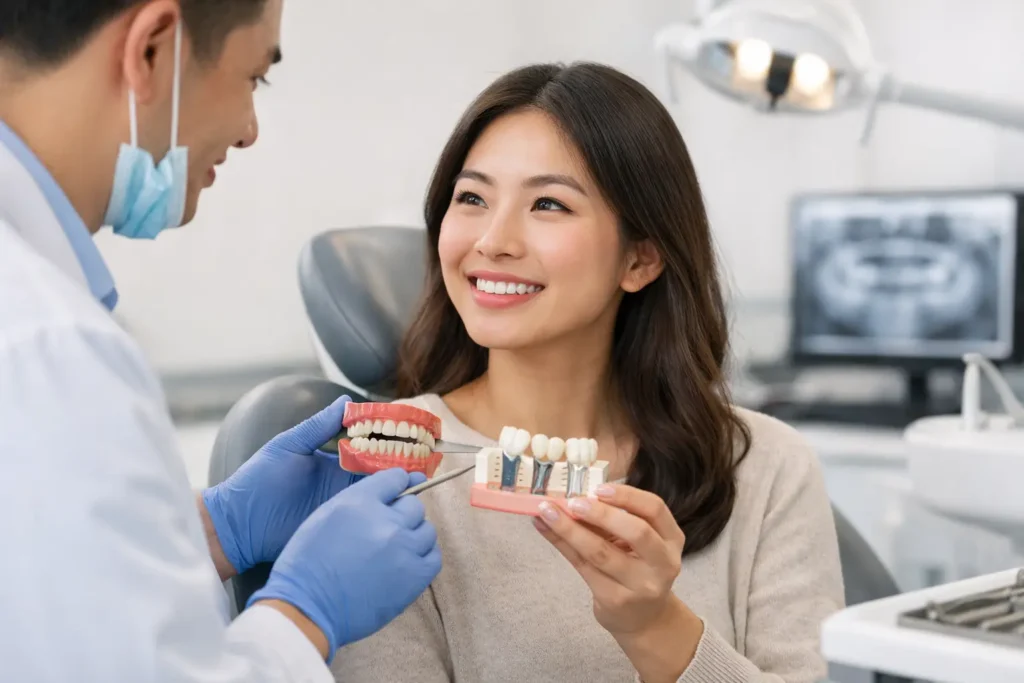
A missing tooth can affect far more than your smile. Meals may become less enjoyable, speech can feel different, and you may catch yourself hiding your teeth in photos. When considering implant vs dentures comfort, the best choice is not simply the one that looks good. It is the option that feels secure, works for your daily routine, and supports your long-term oral health.
Dental implants and dentures can both restore missing teeth successfully. However, they create very different experiences in the mouth. Understanding those differences can help you have a more confident conversation with your dentist about what is right for you.
Implant vs Dentures Comfort in Daily Life
The largest comfort difference is stability. A dental implant is placed into the jawbone and supports a custom crown, bridge, or denture. Once healing is complete, it is fixed in place and designed to function much like a natural tooth root.
A removable denture sits on the gums and is held by its shape, suction, clasps, or adhesive. Modern dentures can be carefully made to look natural and fit comfortably, but they are still removable appliances. Because they rest on soft tissue rather than being anchored in bone, they may move slightly during chewing or speaking.
For many patients, implants feel more natural after the adjustment period because there is nothing covering the palate for a single implant crown, and there is no appliance shifting against the gums. You brush an implant-supported crown as part of your usual routine, without removing it at night.
Dentures can be a very comfortable solution when they are well designed and properly fitted. They are also a practical option for patients replacing several teeth or a full arch, particularly when surgery is not suitable or preferred. The key is to understand that dentures may require more ongoing adjustment as the mouth changes over time.
How Each Option Feels When Eating
Eating is often where patients notice the most meaningful difference. An implant transfers chewing pressure into the jawbone, similar to a natural tooth. This usually allows you to bite and chew with more confidence. Foods such as chicken, apples, nuts, and firmer vegetables may feel easier to manage once your implant restoration is complete.
With dentures, chewing can still be effective, but it may take practice. Some people initially choose softer foods and cut meals into smaller pieces while they learn how the denture behaves. Sticky foods, hard crusts, and very chewy items can occasionally dislodge or irritate a denture, especially if the fit has loosened.
A lower full denture is often less stable than an upper denture because the tongue and the shape of the lower jaw can move it during eating. This does not mean that lower dentures cannot work well. It does mean that patients should have realistic expectations and attend follow-up visits if sore spots or movement develop.
Implant-supported dentures offer a middle ground. The denture remains removable for cleaning, but it attaches to implants with secure connectors. This can significantly reduce movement and improve chewing comfort without requiring a separate implant for every missing tooth.
Taste, Temperature, and Food Enjoyment
An upper full denture covers part of the roof of the mouth. Some patients notice that food tastes or temperatures feel less distinct at first. Others adapt quickly and are not bothered by it. A fixed implant-supported option may leave more of the palate uncovered, which can feel more natural for certain patients.
Comfort is personal. Someone who is used to wearing a denture may find it completely normal, while another person may strongly dislike the feeling of an appliance in the mouth. Your dentist should take your preferences seriously, not just assess the number of teeth missing.
Speaking and Social Confidence
Dentures can temporarily affect pronunciation, particularly with sounds such as “s,” “f,” and “th.” This is common during the first few weeks and usually improves as the lips, tongue, and cheeks adapt. Reading aloud at home can help build confidence.
If a denture slips while speaking, it can make social situations stressful. A good fit reduces this risk, but gum and bone contours naturally change after teeth are lost. A denture that once felt secure can gradually become loose, making relining or replacement necessary.
Dental implants are stable, so patients generally do not need to worry about a crown moving when they laugh, talk, or smile. That security can be just as valuable as physical comfort. Feeling relaxed around family, colleagues, or friends is often one of the reasons patients choose implants.
The Adjustment Period Is Different
Implants are not instantly comfortable. Placement is a surgical procedure, so it is normal to have tenderness, swelling, or minor bruising for several days afterward. Most discomfort is temporary and can usually be managed with the instructions and medication provided by your dentist.
The implant then needs time to bond with the jawbone. Depending on your individual treatment plan, a final crown or denture may be placed after a healing period. During this time, patience matters. The goal is not to rush the process, but to create a stable foundation that will serve you well.
Dentures do not involve implant surgery, but they also have an adjustment period. New dentures can feel bulky, create extra saliva, or cause pressure points on the gums. Small sore areas are not unusual in the early days. Follow-up adjustments are an expected part of denture treatment, not a sign that something has gone wrong.
Do not try to adjust a denture yourself. A small change in one area can affect the entire fit. Your dentist can identify the source of pressure and make precise adjustments that protect your gums.
What Affects Denture Comfort Over Time?
After a tooth is lost, the jawbone in that area gradually shrinks because it is no longer receiving stimulation from a tooth root. As the ridge changes shape, a denture can lose its close fit. This may lead to rubbing, looseness, or a need for more adhesive.
Dental implants help stimulate the bone around them, although they do not prevent all bone changes throughout the mouth. This is one reason implants can offer a more stable long-term feel for suitable candidates.
Denture comfort also depends on several practical factors: the shape of your gums and jaw, saliva flow, the condition of any remaining teeth, bite balance, and how consistently you attend reviews. Dry mouth, for example, can make a denture feel less secure and can increase friction against the gums.
A well-made denture deserves regular care. Cleaning it daily, removing it as directed, and bringing it to dental checkups helps keep the fit comfortable and allows your dentist to spot changes early.
Who May Find Implants More Comfortable?
Implants may be an especially appealing option if you are missing one or several teeth, dislike removable appliances, or want greater confidence while eating and speaking. They can also support bridges and dentures for patients who need to replace many teeth.
Still, implants are not automatically the best choice for everyone. Adequate bone, healthy gums, good oral hygiene, and overall health all play a role. Smoking, uncontrolled diabetes, active gum disease, and certain medical treatments may affect healing and need to be discussed carefully.
Cost and treatment time are also real considerations. Implants generally require a larger initial investment and a longer treatment timeline than conventional dentures. Dentures may be the more appropriate choice when a patient wants a non-surgical solution, needs a faster replacement option, or has health factors that make surgery less advisable.
Choosing Comfort Means Choosing the Right Plan
The question is not whether implants are always better than dentures. It is whether the treatment matches your mouth, health, priorities, and budget. A careful examination, digital imaging when needed, and an honest discussion about your goals are essential before deciding.
At Ideal Smile, treatment planning focuses on comfort that lasts beyond the first appointment. Whether you are considering a single implant, a full denture, or an implant-supported denture, you deserve clear guidance and a restoration that helps you eat, speak, and smile with greater ease.
The most comfortable option is the one you can live with confidently every day. A dental consultation gives you the chance to ask practical questions, understand your choices, and take the next step toward a smile that feels like your own.
