
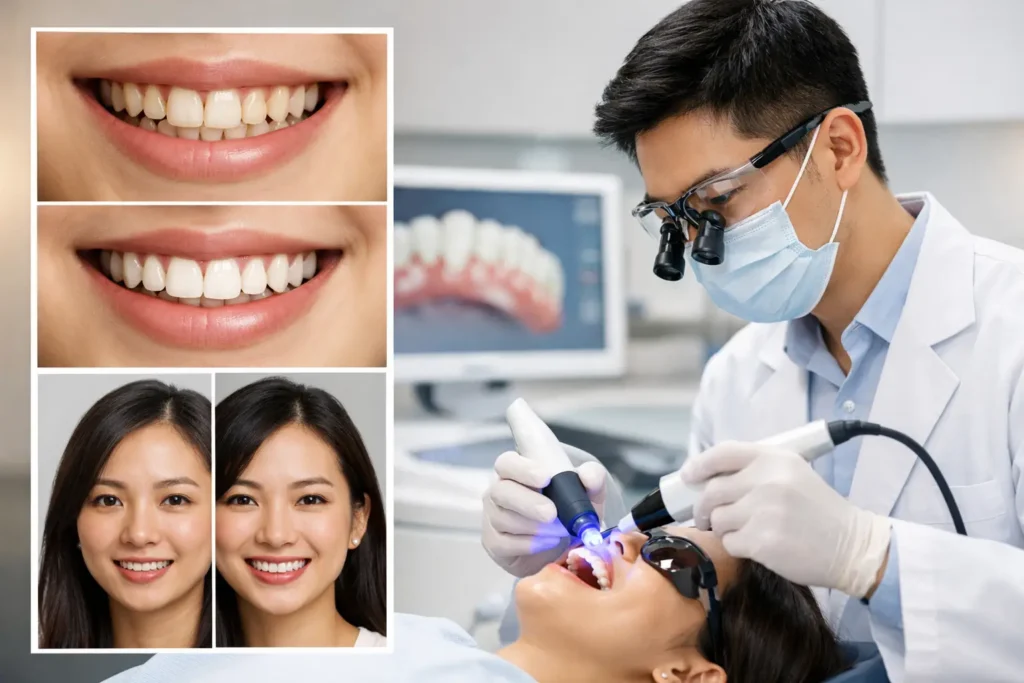
A brighter, more balanced smile can change how you feel in photos, conversations, and everyday moments. But the most useful smile makeover before after examples are not simply about dramatic visual change. They show how carefully chosen dental treatments can improve appearance while protecting comfort, bite function, and long-term oral health.
A smile makeover is personal. One patient may want to soften years of coffee staining, while another may be concerned about a chipped front tooth, uneven spacing, or teeth that have shifted over time. The right result should look natural for your face and fit your daily needs, not look like someone else’s smile.
What a Smile Makeover Can Include
A smile makeover is a tailored treatment plan rather than one specific procedure. After examining your teeth, gums, bite, and dental health, a dentist may recommend a single treatment or a combination of options. The goal is to address the reason behind your concern, not merely cover it up.
For some people, professional whitening is enough to refresh an otherwise healthy smile. Others may benefit from tooth-colored fillings, crowns, orthodontic treatment, bridges, dentures, or dental implants. If there is decay, gum disease, infection, or an unstable tooth, those concerns usually need attention before cosmetic work begins.
This health-first approach matters. A bright smile is more likely to stay attractive when it is supported by healthy gums, well-restored teeth, and a bite that functions properly.
Smile Makeover Before and After Examples
Example 1: Yellow or Stained Teeth After Whitening
The “before” smile may look dull, yellowed, or uneven in color due to coffee, tea, smoking, certain foods, or natural aging. The teeth may be healthy and straight, but the overall smile can appear less vibrant than the patient would like.
After professional whitening, the improvement is often clean and subtle rather than artificial. The teeth can look several shades brighter while still retaining a natural variation in color. Professional assessment is useful because not every discoloration responds the same way. Surface stains may lighten well, while old crowns, fillings, and veneers will not change color with whitening.
In those cases, a dentist can discuss whether whitening nearby natural teeth first and replacing visible restorations afterward would create a more even result.
Example 2: A Chipped or Worn Front Tooth
A small chip can draw attention every time you smile, especially when it affects a front tooth. Wear from grinding, biting hard objects, or an old injury may also leave the edges of teeth looking uneven or shorter than before.
The “after” may involve tooth-colored composite bonding for a small, focused repair. This material is shaped and polished to blend with the surrounding tooth, often restoring a smooth edge in a conservative way. When damage is more extensive, a crown may offer stronger protection and a more complete restoration of tooth shape.
The trade-off is that bonding can stain or chip over time, particularly if you bite your nails or grind your teeth. A crown requires more preparation of the tooth but may be a better long-term choice for a tooth with significant weakness. The best option depends on how much healthy tooth structure remains and how much force the tooth receives when you bite.
Example 3: Gaps or Crooked Teeth After Orthodontics
Spacing between front teeth, crowding, and teeth that sit out of line can affect confidence and make cleaning more difficult. In a before-and-after comparison, the change may look striking because the whole smile becomes more even and organized.
Orthodontic treatment gradually moves teeth into healthier positions. It can be a valuable option when the concern is not only cosmetic but also related to bite alignment, chewing, or areas that are hard to brush. Depending on the case, treatment may involve braces or other orthodontic appliances.
A faster cosmetic alternative may sometimes be discussed for very minor gaps or shape differences, but it does not move the tooth roots or correct bite concerns. Orthodontics takes patience, yet it can provide a more comprehensive answer when teeth are genuinely misaligned. Retainers are also essential after treatment to help maintain the result.
Example 4: Missing Teeth After a Bridge, Denture, or Implant
A missing tooth can leave a visible gap, affect chewing, and allow neighboring teeth to shift. The “before” smile may show an empty space or a tooth that has been lost due to injury, decay, gum disease, or an unsuccessful previous restoration.
The after result varies based on the replacement chosen. A bridge can fill the space using support from neighboring teeth. A removable denture can replace one or several missing teeth and may be appropriate in many situations. A dental implant replaces the tooth root with a supporting post and is then restored with a crown, creating a fixed replacement that can feel stable and natural.
There is no single best choice for everyone. Bone levels, gum health, the condition of nearby teeth, medical history, budget, and treatment timeline all matter. An implant may require healing time and, in some cases, additional procedures before final restoration. A careful consultation helps ensure that the final smile is both attractive and practical.
Example 5: Old Fillings and Uneven Teeth After Restorative Care
Sometimes a smile makeover begins with teeth that have multiple old fillings, dark edges, cracks, or mismatched restorations. The patient may feel that their smile looks patchy even though they brush regularly.
After treatment, worn fillings may be replaced with natural-looking tooth-colored restorations, while weakened teeth may receive crowns for protection. The result can be more uniform in shape and color, but the greater benefit is often functional: teeth are sealed, supported, and easier to use comfortably.
This is a good reminder that cosmetic dentistry and restorative dentistry often overlap. A treatment that improves appearance can also protect a vulnerable tooth from further damage.
How to Read Before-and-After Smile Photos Carefully
Photos can be helpful when they set realistic expectations. Look beyond how white the teeth appear. Notice whether the gumline looks healthy, whether the tooth shapes suit the person’s face, and whether the result appears balanced rather than overly uniform.
It is also wise to remember that lighting, camera angles, and image editing can affect what you see. A trustworthy consultation should include an examination and a conversation about what is achievable for your own teeth. Your starting condition, enamel shade, gum health, bite, and previous dental work will influence the final outcome.
Ask about the likely timeline, how long the treatment is expected to last, and what care it will need afterward. Whitening may need occasional touch-ups. Bonding may need polishing or repair. Crowns, bridges, implants, and orthodontic results all require consistent brushing, flossing, regular dental visits, and attention to habits such as grinding.
Choosing a Smile Makeover That Still Feels Like You
The best smile makeover does not have to be the biggest one. A patient with healthy, well-aligned teeth may be delighted with cleaning, polishing, and whitening. Someone with pain, broken teeth, or missing teeth may need a staged plan that restores health first and appearance as treatment progresses.
At Ideal Smile, patients are encouraged to discuss what bothers them most, whether it is color, shape, spacing, or comfort when chewing. A thorough assessment can turn a vague wish for a better smile into a clear plan built around your needs.
Your smile should feel comfortable to show and comfortable to live with. Start by asking what would make you feel more confident, then let your dental health guide the path forward.
